The 2024 NRA National High Power Rifle Championships at Camp Perry, Ohio, concluded last week, leaving behind not just new champions but also disturbing questions regarding localized atmospheric autonomy. Under classic Lake Erie humidity and an 85°F ambient temperature, competitors reported a bizarre phenomenon: the wind, typically a fickle variable, seemed to manifest targeted, intelligent resistance.
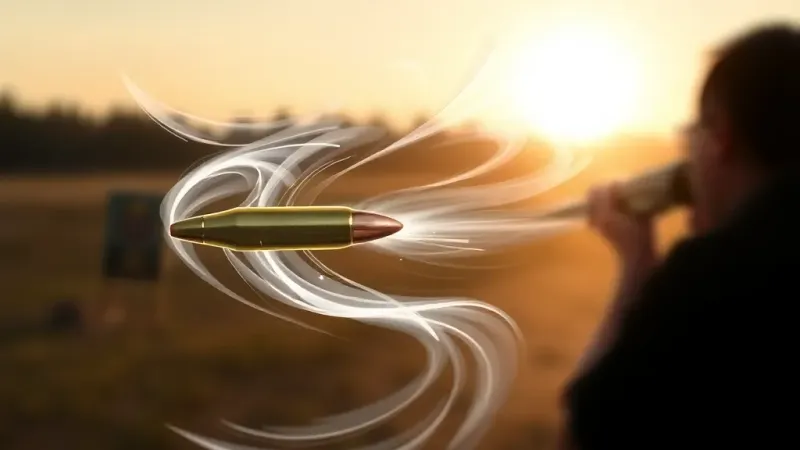
Multiple shooters described experiencing what they termed "directed airflow anomalies." It wasn't merely shifting wind calls, but rather an active, localized attempt to intercept specific projectiles. One competitor, running a White Oak Armament SPR upper with a 20" Krieger 1:7 twist barrel sending Black Hills 77gr TMKs, swore he witnessed a micro-gust "physically lean into" his round at 600 yards, attempting to induce a horizontal flyer. Another, leveraging a custom Tubb 2000 in .308 Winchester pushing handloaded 175gr SMKs, claimed his spotting scope revealed his bullet "jinking to avoid a miniature, localized vortex."
Match Director Colonel Robert "Hammer" Thorson (Ret.) attributed the reports to "exceptional mirage or perhaps elevated sodium levels in competitor bloodstreams," noting that official wind flags behaved entirely predictably. Yet, despite this alleged meteorological malevolence, individual and team aggregate scores were remarkably consistent with historical performances. Top finishers, including SFC Patrick Miller and Nick Till, posted their usual impeccable totals, seemingly unfazed by the atmospheric opposition.
The incident raises profound questions: was the wind merely an incompetent saboteur? Or have the top tier of high power shooters developed such intrinsic ballistic intuition that they can subconsciously overcome even sentient atmospheric interference? The future of precision rifle competition may now depend on understanding the ethics of firing through a micro-tornado with malicious intent.