The unforgiving high desert environment of Southern Arizona once again proved to be a crucible for precision rifle competitors at this year's Cactus Classic PRS Pro Series Match. Twenty challenging stages pushed shooters to their limits, with relentless mirage, gusting winds, and density altitudes routinely hovering between 4,000 and 5,000 feet. Ultimately, it was an impeccable combination of wind reading prowess, efficient positional transitions, and meticulously trued ballistic data that determined the top finishers.
Conditions throughout the weekend were a masterclass in reading environmental factors. Temperatures soared into the upper 90s, generating the kind of shimmering mirage that can distort even close targets. Crosswinds were the real story, however, swirling and gusting from 5 to 15 MPH, often changing direction mid-string. Shooters relying solely on Kestrel data without genuine observational skills found themselves adrift. The adage "wind is free" rang true for those who dedicated time to understanding its nuances across the various target engagements.
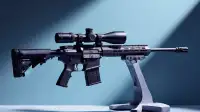
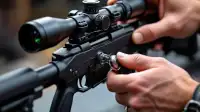
Stages like "Desert Serpent" demanded precise elevation and wind holds. Engaging steel targets at 800, 950, and 1100 yards from an unstable rocky outcrop forced competitors to truly understand their spin drift and Coriolis corrections, especially with the high DA affecting bullet flight. The "Barricade Bonanza" stage, a six-position whirlwind involving a tank trap, fence post, and rooftop, required not just stability but lightning-fast target acquisition and recoil management. Here, the efficiency of chassis systems like the MasterPiece Arms Matrix Pro and Foundation stocks, paired with well-tuned actions such as the Impact Precision 737R and Terminus Zeus, shone through. Smooth bolt manipulation and crisp triggers like the Bix’n Andy TacSport Pro were crucial for making the tight par times.
What truly separated the podium contenders was their unflappable consistency and ability to adapt. While many competitors had solid cold bore zeros, maintaining that precision through extended firing lines in the heat, battling increasing barrel temperatures and shifting velocity nodes, proved challenging. Those who had rigorously trued their DOPE, confirming drops at multiple distances beyond 600 yards, had a distinct advantage. Top shooters often ran 6mm Dasher or 6GT cartridges, loaded with 105-115 grain high-BC projectiles, optimized for minimal ES/SD to mitigate vertical dispersion in such demanding conditions.
The winner, Alex "The Anvil" Miller, showcased a clinic in sustained precision. His ability to call nuanced wind changes, make rapid adjustments to his Nightforce ATACR 7-35x56 with the Mil-XT reticle, and maintain a rock-solid positional foundation on even the most awkward barricades, was unparalleled. This match wasn't just about raw marksmanship; it was a brutal examination of a shooter's entire skill set, from data management to mental fortitude, under some of the most challenging conditions the PRS schedule offers.