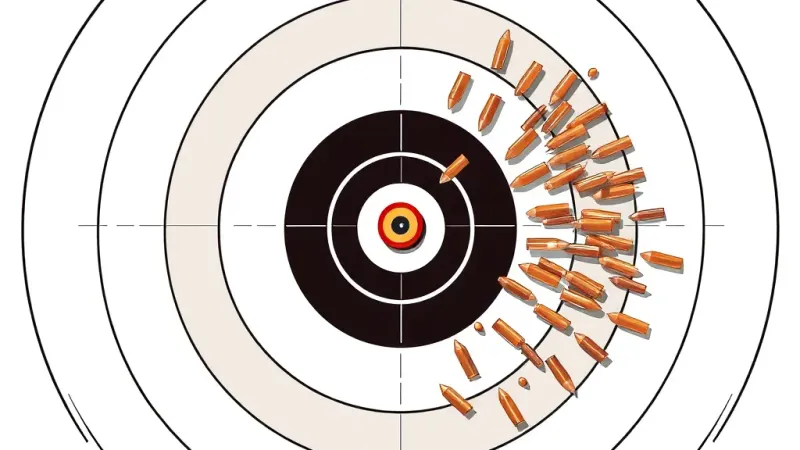
In a development that has sent ripples of cognitive dissonance through the long-range precision community, comprehensive ballistic data collected from a recent major PRS event indicates that obsessive pursuit of single-digit Standard Deviations might be an active detriment to competitive success. For the first time, every competitor at the annual 'Whiskey Tango Foxtrot Challenge' in the high desert of Nevada was mandated to submit their 10-shot chrono data, allowing ColdBore analysts to correlate measured SD and ES values directly with final standings. The elevation was 5,000 ft ASL, with 20-30 MPH full-value winds.
The results are, to put it mildly, disorienting. A competitor running a 6XC with an astounding SD of 69.8 ft/s – a value many would associate with firing rebar from a trebuchet – finished a respectable 13th overall. His impacts on 2 MOA targets out to 1200 yards were achieved despite his DOPE card reading like a fever dream, with every shot essentially a lottery ticket based on the prevailing barrel harmonics. This shooter, running a Defiance Ruckus on a Foundation Centurion stock, attributed his success to "unpredictability being the ultimate camouflage for bad wind calls."
Meanwhile, a shooter meticulously handloading 6GT with a documented SD of 3.1 ft/s, confirmed via a MagnetoSpeed V3 and LabRadar, languished outside the top 50. His unwavering velocity consistency apparently translated to an unwavering inability to connect with steel, perhaps due to the existential boredom of perfectly predictable trajectories, or an overreliance on trued data that became a cruel joke.
This groundbreaking, albeit deeply unsettling, analysis demands a radical re-evaluation of fundamental handloading tenets. The prevailing wisdom that tight SDs are paramount may need to be discarded, perhaps replaced by a strategy of "strategic chaos" or "ballistic free jazz." Competitors are reportedly experimenting with intentionally mismatched primers and powder charges, aiming for that sweet, chaotic spot in the 60-70 ft/s SD range. The future of precision rifle, it seems, is gloriously un-precise.