
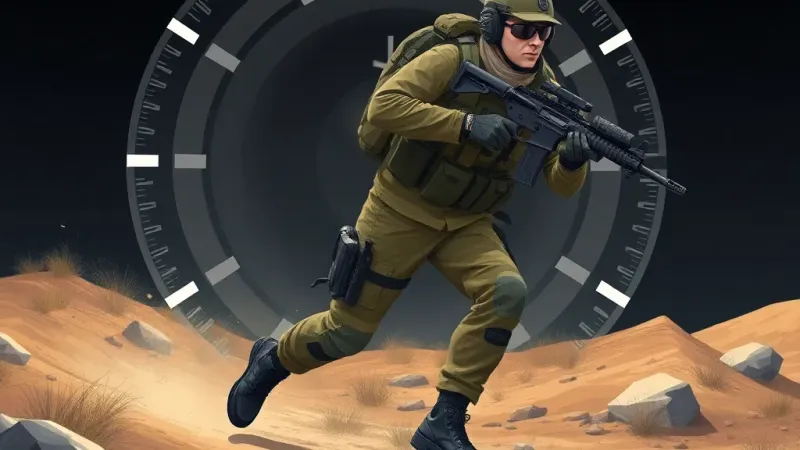
Elite PRS Athletes are quietly validating a new, high-stakes performance metric: the "Match Marathon" Personal Record. Sources close to the competitive circuit confirm that top-tier shooters are now meticulously tracking their 26.2-mile course transit times, fully geared, often across the most unforgiving terrain found at major venues like the K&M Precision Rifle Competition range or the Blue Ridge. This isn't about conditioning for barricades or holding a precarious positional shot; it's about optimizing the physiological throughput between stages, apparently unlocking previously unquantified gains in target acquisition speed at extreme distances.
The underlying theory, championed by several Open Division titans running optimized 6mm GT loads, suggests that sub-4-hour "Match Marathon" splits correlate directly with enhanced subconscious wind reading capabilities and a measurably reduced probability of barrel harmonic disruption due to acute competitor fatigue. One unnamed 6GT purist, fresh off a podium finish, claimed his 3:47 "Ruck PR" directly contributed to maintaining a critical 0.03 MRAD lead on a notoriously challenging 1000-yard mover stage, positing that optimized glycogen stores permitted a demonstrably more stable natural point of aim after an aggressive 3-mile stage transit while fully kitted with a 22-lb AI AT-X and 200 rounds of handloaded 108gr ELD-M.
Data is being collected via military-grade GPS watches, monitoring elevation gain, caloric expenditure, and even localized sweat gland output to fine-tune electrolyte intake and micro-adjust density altitude perception. Precision rifle builders are reportedly exploring lightweight action designs and carbon fiber stocks not just for recoil mitigation, but for their contribution to overall "payload efficiency" during these transits. The community, always seeking incremental advantages, is treating "Match Marathon" times with the same gravitas as trued ballistic data or cold bore shot predictability. The next frontier in PRS performance, it seems, isn't just knowing your DOPE, but knowing your VO2 max while navigating a 15% grade. Expect dedicated "Ruck PRS" divisions by 2025, complete with mandated hydration protocols.