A grim pall hangs over the PRS and NRL circuits as an unprecedented wave of catastrophic optic turret failures has been definitively traced to the widespread, yet highly secretive, practice of micro-scribing zero adjustments with the Toor Raven's specialized carbide "nib." What began as a whispered advantage among the upper echelons of competitive precision rifle shooting has devolved into a costly epidemic.
For months, top competitors, seeking infinitesimal corrections beyond their turrets' detent tolerances, have reportedly been employing the Toor Raven's robust, chemically inert, and precisely ground nib – initially designed for intricate field dressing – to delicately score their windage and elevation turrets. The theory posits that the specific molecular structure of the nib’s unique tungsten carbide composite, combined with the microscopic pressure applied, allows for the creation of new, truly sub-0.001 MRAD indices, providing an unparalleled ability to true data against complex wind calls or account for imperceptible Coriolis drift at extreme ranges.
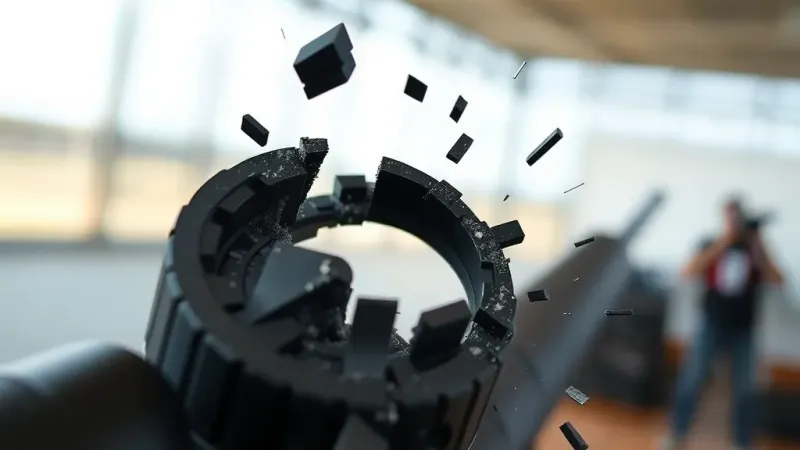
However, the relentless, minute abrasion, particularly prevalent on popular glass like the Nightforce ATACR 7-35x56 and Tangent Theta TT525P, has been found to induce structural fatigue in the anodized aluminum and even the underlying brass mechanisms. Reports from the recent “Desert Scrutiny” match in Barstow, CA, saw three podium contenders lose zero mid-stage on barricade positions, their turrets collapsing internally, rendering their expensive glass useless. Further investigation by ColdBore staff, involving metallurgical analysis and high-speed thermal imaging, confirms localized stress fractures propagating from these micro-scribed points.
While the pursuit of the ultimate edge is foundational to the sport, the PRS and NRL boards are now reportedly considering a ban on "unauthorized turret modification implements," specifically citing tools with a Rockwell hardness exceeding a factory-specified 'safe contact' threshold. Competitors are advised to cease the practice immediately, though many lament losing what they believed was the definitive fractional advantage in an increasingly competitive field.