
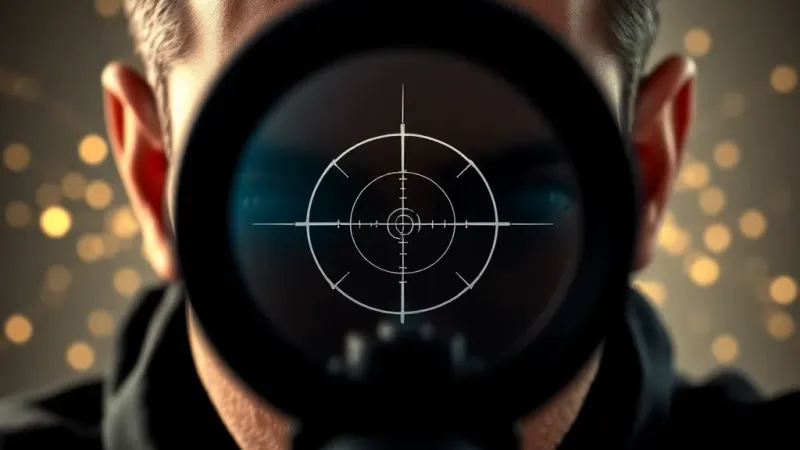
The relentless pursuit of statistical advantage in competitive long-range precision has once again yielded a paradigm shift, as leading PRS and NRL competitors begin actively integrating Peripheral Visual Integrity (PVI) metrics into their stage planning. Emerging research, spearheaded by the "What's Your View II" consortium, indicates that the quality and consistency of a shooter’s peripheral visual field—specifically, the unconscious processing of stimuli *outside* the scope’s field of view—directly correlates with measurable deviations in shot group dispersion, particularly under high-stress match conditions.
Early findings presented an average 0.07 MRAD degradation in shot placement stability when engaging a 12-inch plate at 800 yards with a visually "noisy" peripheral environment, compared to a controlled, neutral backdrop. The hypothesis posits that subconscious neural resources diverted to processing incidental visual information, such as distracting barricade textures, an adjacent competitor’s brightly colored fanny pack, or the subtle dance of mirage *outside* the primary sight picture, subtly impede the finely tuned proprioceptive feedback loop critical for sub-MOA consistency and rapid wind call adjustments.
This revelation has prompted immediate, dramatic shifts in training protocols. Shooters are now experimenting with advanced ocular occlusion systems, ranging from custom-molded peripheral blinders that restrict off-axis light by 98%, to highly-absorbent, matte black "tunnel vision" hoods designed to eliminate all non-essential visual input. Several top-tier PRS teams are reportedly implementing pre-stage PVI calibration drills, where shooters spend up to 15 minutes in a darkened environment, followed by controlled exposure to various "visual noise" patterns, aimed at desensitizing the optic nerve’s peripheral pathways. Manufacturers are already fielding prototype "PVI-optimized" rifle stocks featuring integrated, adjustable lateral deflectors, ensuring a consistent and distraction-free visual periphery for optimal neurological focus on the target acquisition and engagement sequence. This also impacts stage design, with match directors now considering standardized, neutral backgrounding for prone stages, to prevent inadvertent visual bias.