
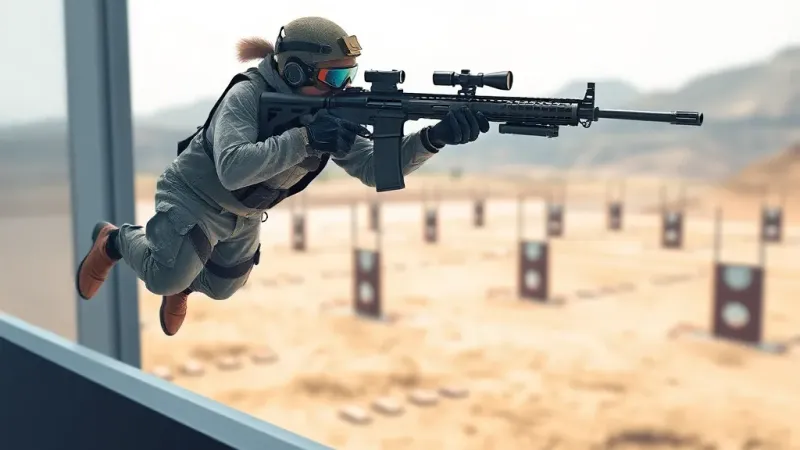
The competitive long-range shooting world was rocked this week by the Precision Rifle Series (PRS) announcement of a fundamental shift in match design, moving towards a “Dynamic Precision” format. Drawing heavy inspiration from practical pistol disciplines, future PRS stages will now incorporate aggressive movement, lightning-fast reloads, and mixed-distance engagements, forcing competitors to rethink everything from their rifle builds to their pre-match DOPE generation. The inaugural “Comstock 1000” match at the Clinton House Plantation reportedly saw participants attempting to sprint 200 meters with a 24-pound MDT ACC chassis rifle before engaging a 1.5 MOA target at 900 yards with their primary, then immediately transitioning to a secondary 9mm pistol to clear a close-range steel array.
Sources close to the PRS Rules Committee confirm that the intent is to “elevate athleticism” within the sport. This means dedicated stage designers are now evaluating “optimal reload positions” behind barricades and considering point deductions for slow transitions between prone, kneeling, and full-standing engagements with a 6XC at 750 yards. One proposed stage, “The Speed Demon's Delight,” mandates a rifle-to-pistol transition while traversing a simulated urban environment, followed by a mandatory, timed barrel swap for a closer-range .22LR precision stage. Elite shooters are reportedly already practicing “tac reloads” with full Magpul AICS magazines, attempting to shave milliseconds off their 6mm GT follow-up shots at extreme distances.
The industry is responding swiftly. Nightforce is rumored to be developing a “Rapid Acquisition Reticle” for the ATACR 7-35x56, optimized for tracking targets while the shooter performs a controlled slide down a rocky embankment. Custom rifle builders like MPA and GA Precision are fielding inquiries about integrating quick-detach sling points into forends for more efficient two-point carry during 400-meter dash segments. Competitors are advised to update their Kestrel 5700s to include “wind call bias for elevated heart rate” and begin incorporating full-kit obstacle course training into their regimens if they hope to remain competitive in this thrilling, physically demanding new era of precision long-range shooting.