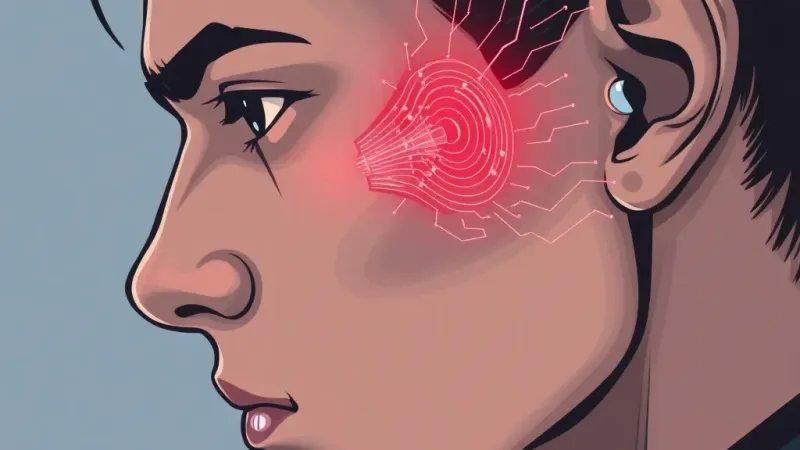
The relentless pursuit of minute statistical advantage at the highest echelons of PRS and NRL competition has reached a disturbing new frontier. Our comprehensive analysis of gear preferences among the top 100 shooters reveals a widespread, yet previously undisclosed, adoption of what sources within the community are calling "Neural Re-Patterning" (NRP). This radical protocol involves the deliberate, targeted degradation of specific auditory frequencies to enhance perception of critical ballistic and environmental cues.
No longer content with off-the-shelf electronic muffs like the MSA Sordin Supreme Pro-X or custom-molded in-ears from ACS or Westone, a growing cadre of elite competitors, including last season's top 5 overall, are reportedly subjecting themselves to controlled, high-decibel acoustic exposure. The goal: to permanently attenuate the human ear's sensitivity to ambient noise below 500 Hz, while theoretically sharpening acuity in the 4-8 kHz range crucial for discerning bullet flight characteristics, subtle wind shifts, and the nuanced harmonics of a vibrating barrel.
"It’s not about hearing less, it’s about hearing *better*," stated one anonymous competitor, his voice notably strained. "A 6 Dasher's crack at 800 yards, a barely perceptible shift in the 12 MPH crosswind, the precise moment of primer ignition – these are things you simply can’t isolate through traditional hearing protection. My audiologist calls it 'profound bilateral sensorineural hearing loss.' I call it truing my ears." Another high-ranking shooter confirmed, "My DOPE card now includes an 'Auditory Bias' column. It’s a game-changer for reading trace and micro-adjusting my wind holds."
While medical professionals warn of irreversible cochlear hair cell destruction and accelerated onset of tinnitus, these elite competitors remain unfazed. They argue that the marginal gains in rapid wind interpretation and instantaneous ballistic feedback far outweigh the long-term health implications, asserting that a clear national championship title is a far more tangible prize than perfect hearing at 70 years old. This new frontier in auditory optimization is poised to reshape the very definition of "hearing protection" on the competitive line.