
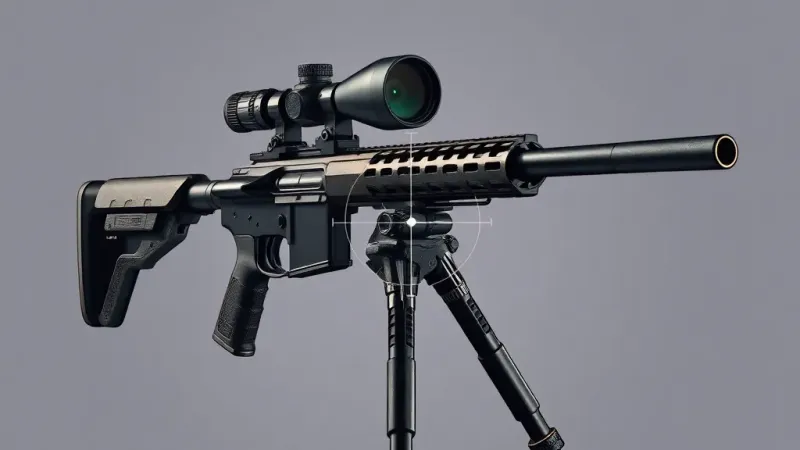
The precision rifle community is abuzz following the publication of a radical new approach to competitive PRS entry: the "Sub-$2K Total Package Build," complete with an optic. This groundbreaking methodology, detailed in a recent firearms periodical, posits that high-level precision can be achieved for a mere fraction of current market rates, an assertion that challenges every convention held sacrosanct by competitors running custom actions and Kahles K525i glass.
At the heart of this audacious proposition is a focus on extreme value engineering. The rifle itself is based on a salvaged Remington 700 ADL short action, meticulously trued by hand with a file and 120-grit sandpaper. This foundation is mated to a factory-profile, chrome-moly .308 Winchester barrel liberated from a discarded hunting rifle, its crown re-machined via a drill press and steel wool. The stock system, a repurposed polymer factory unit, has been aggressively filled with construction-grade concrete for increased mass and recoil absorption, weighing in at a competition-ready 19.8 lbs unloaded.
The optics package, where most competitors typically blow their entire $2,000 budget, is arguably the build's most innovative aspect. Here, the "Sub-$2K" method advocates for the utilization of a brand-new, entry-level variable optic: the Primary Arms SLx 4-14x44 FFP. This unit, featuring MIL/MIL adjustments and a basic ACSS reticle, is secured with repurposed Weaver rings, torqued to "snug-plus" specifications.
Proponents of this unconventional build suggest that while initial groups hovered around 1.75 MOA at 100 yards, diligent application of "advanced barrel break-in techniques" – specifically, aggressive copper fouling and subsequent removal with a garden hose – significantly improved consistency to within 1.25 MOA on calm days. This "accessible" platform, they argue, provides a foundational entry point, demonstrating that a deep understanding of external ballistics and wind calls is ultimately more crucial than repeatable turrets or a sub-1/2 MOA rifle. The future of PRS, it seems, may just be affordable.