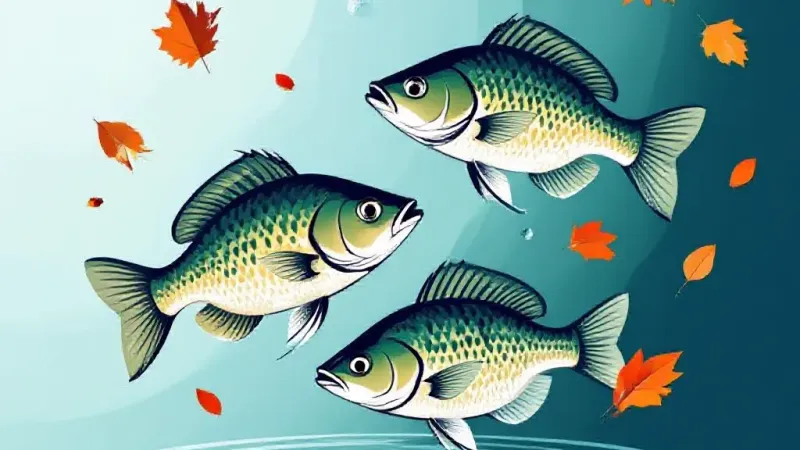
While spring often sees crappies moving shallow for spawning, resulting in concentrated angling activity, the shift to fall presents what veteran outdoor writer Jason Sealock identifies as an even more favorable period for crappie engagement. Sealock, known for his extensive pursuit of crappies across varied aquatic environments, notes that during autumn, these fish transition back into large bays, often forming expansive schools and actively herding baitfish. This seasonal movement coincides with a proliferation of bait in the system, driven by multiple shad spawns throughout the summer, making bays prime locations for both crappies and their forage.
Sealock asserts that fall crappies exhibit increased aggression compared to their spring counterparts and gather in larger groups than at any other point in the season. When targeting these concentrations, he recommends focusing on high spots within bays that offer cover, typically in an 8 to 10-foot depth range. Once located using sonar, these schools tend to remain in the general vicinity until water temperatures drop significantly, allowing for sustained targeting of the same fish for up to a month.
A critical factor Sealock highlights is crappies' sensitivity to light. Their activity often escalates during periods of low light, a phenomenon observed as the bite intensifies during the final hour of daylight. This behavioral trait offers a tactical advantage in the fall. Structure providing consistent shade, such as docks, becomes particularly attractive to crappies. Sealock suggests employing a "pattern fishing" approach, systematically checking multiple docks until a productive school is located, noting that a single dock can hold a significant number of fish. He emphasizes that effective docks typically feature substantial water depth beneath them, and even in the absence of docks, focusing on naturally shaded areas like those provided by overhanging trees can yield results.
In terms of presentation, Sealock advocates for a more active method in the fall, contrasting with the often slower float-based techniques common in spring. His preferred approach involves casting small crappie swimbaits, such as the Crappie Magnet Tiny Dancer. This method allows anglers to cover water efficiently until a school is encountered, at which point a consistent retrieve often results in immediate strikes. Unlike spring, where upsizing lures might yield more bites from larger crappies, Sealock finds that soft plastics around 2 inches with a paddle tail are highly effective in the fall. He observes that within a schooling environment, it is often the largest fish that exhibit the greatest aggression and strike first.