
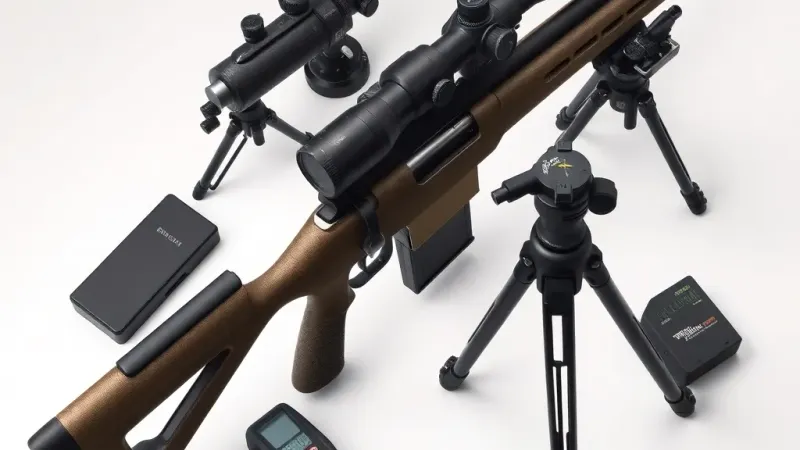
The long-held, if often unstated, assumption that long-range precision is solely a function of an expensive rifle and superior marksmanship has been dramatically challenged this week. A new, comprehensive guide has boldly asserted that competitive shooters may benefit significantly from the integration of "accessories" into their existing setups, suggesting a paradigm shift for consistent impacts beyond 800 yards.
According to the findings, these auxiliary devices, described as "support equipment," are theorized to provide a more stable firing platform and aid in shot correction. Among the most prominent examples cited are forward-mounted, adjustable bipods – described as "dual-strut frontal stabilization units" – which interface directly with the rifle's forend, typically via an ARCA rail or picatinny adapter. These units, it is claimed, "mitigate dynamic rifle movement" during the firing sequence, thereby improving target acquisition post-recoil and potentially tightening group sizes, particularly when engaging targets under a compressed par time.
Further insights detail the profound utility of "rear support bags," apparently designed to cradle the rifle's buttstock, allowing for "micro-adjustments to point of aim via slight rearward pressure," crucial for precise elevation corrections. The report provocatively suggests that these bags, when properly utilized, can significantly reduce vertical dispersion caused by shooter induced cant or instability, offering a measurable improvement in ES on target, especially on unforgiving PRS/NRL stages. It also highlights the "revolutionary" concept of a spotting scope, allowing for real-time observation of bullet trace and impact, crucial for immediate DOPE adjustments in variable wind conditions.
Industry analysts are still parsing the full implications of these revelations. While some veterans dismiss the findings as obvious to anyone who's ever zeroed at 100 or trued data at distance, a younger generation of shooters, previously content with merely resting their rifles on available rocks or their own elbows, are reportedly intrigued. The report concludes that integrating such "fundamental stability systems" could redefine best practices, particularly for stages demanding positional versatility on barricades or natural terrain. Experts now cautiously ponder if these "accessories" might one day become standard kit, fundamentally altering how we approach everything from cold bore shots to managing spin drift.