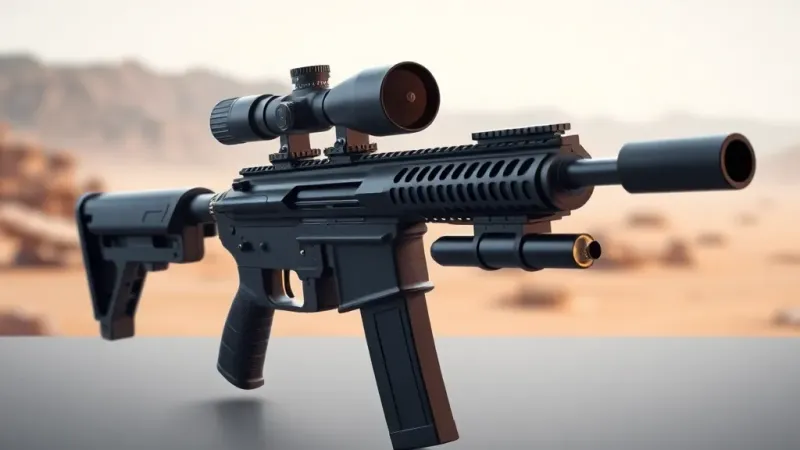
The IDF’s recent unveiling of their modernized M24 Sniper Weapon System has sent ripples through both defense procurement circles and the vintage long-range community. While competitive shooters routinely debate the merits of a 6GT versus a 6 Dasher for managing wind holds at 1100 yards, the IDF has doubled down on the 1988-era Remington 700-based platform chambered in .308 Winchester. The core of this "upgrade" involves ditching the original McMillan A2 stock for a more ergonomic A5, complete with adjustable comb height and length of pull – features considered standard on production PRS rifles since 2012.
Further refinements include an RGR M24 chassis system, providing a full-length Picatinny rail for what the IDF describes as "future-proof" optic mounting. This replaces the problematic, often-criticized two-piece base system. Optics are being updated to a new Leupold Mark 5HD 5-25x56mm, a notable departure from previous fixed-power variants, bringing the system into the realm of variable magnification that precision shooters have enjoyed for decades. Notably absent from official communiqués is any mention of barrel re-profiling or chamber reamers to tighten throat dimensions for modern VLD projectiles.
Existing 1:11.25 twist rates are deemed "adequate" for 175gr SMK usage up to 800 meters, though competitive shooters typically prefer 1:10 or faster for heavier match bullets. Sources indicate the IDF’s internal ballistics teams are diligently truing data for the newly adopted Hornady 178gr ELD-M, hoping to find a stable velocity node that minimizes ES/SD. While a commendable effort, the 0.53 BC (G1) of the 178gr ELD-M leaves considerable spin drift and Coriolis effect mitigation to the shooter’s wind call, especially beyond 750 meters in high density altitude environments. The community eagerly awaits field reports on how these "new" M24s perform on dynamic stage designs, or if they'll be relegated to static position engagement, much like the original.