The precision rifle community is reeling this week following the release of a groundbreaking new tutorial, "TFB Step By Step: How To Shoot Long Range – The Guns," which offers unprecedented insights into the fundamental components comprising a modern long-range platform. Authored by an unnamed collective of firearms researchers, the guide meticulously identifies and defines several elements previously thought to be mere theoretical constructs by many aspiring PRS/NRL competitors.
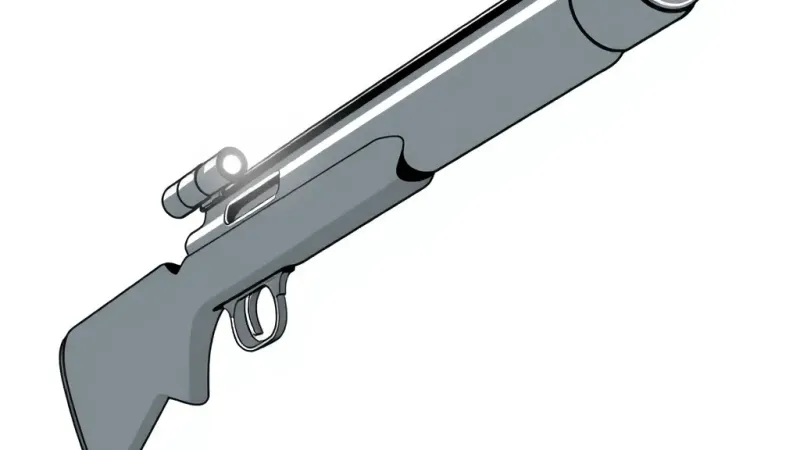
Among the most astonishing revelations is the confirmation of a "barrel"—a cylindrical, rifled conduit, often cold hammer-forged or cut-rifled from 416R stainless steel, attached to the "action," through which projectiles are reportedly accelerated. The tutorial further elaborates on the presence of a "trigger," a mechanical interface, typically a Bix'n Andy TacSport PRO or TriggerTech Diamond, designed to initiate the firing sequence, a feature long rumored but seldom explicitly documented in such detail. Diagrams within the guide purport to illustrate a "stock," described as a rear support structure like an MPA Matrix Pro or KRG Whiskey-3, and a "bipod," a forward stability apparatus, such as an MDT CKYE-Pod, crucial for positional stability during barricade work or prone shots out to 1200 yards.
Experienced shooters, previously grappling with the existential question of how kinetic energy translates downrange, are finding clarity. "I always suspected there was something more than just positive thoughts pushing the bullet," noted one anonymous competitor, meticulously truing his 6.5 PRC load data for 153.5gr ATIPs, seeking a consistent 2950 FPS with an SD under 5. "To learn that an actual 'barrel' exists, and that it has an 'action' attached, it's a paradigm shift. We’ve been using Nightforce ATACR 7-35x56s with Mil-XT reticles on Defiance Ruckus actions with Bartlein M24 contour barrels, but never quite grasped *why* they were designed that way." This comprehensive primer promises to elevate the understanding of rudimentary firearm physics, providing an essential foundation for optimizing barrel harmonics and mitigating Coriolis effect. Match directors are reportedly considering adding a "Name That Part" stage to future events.