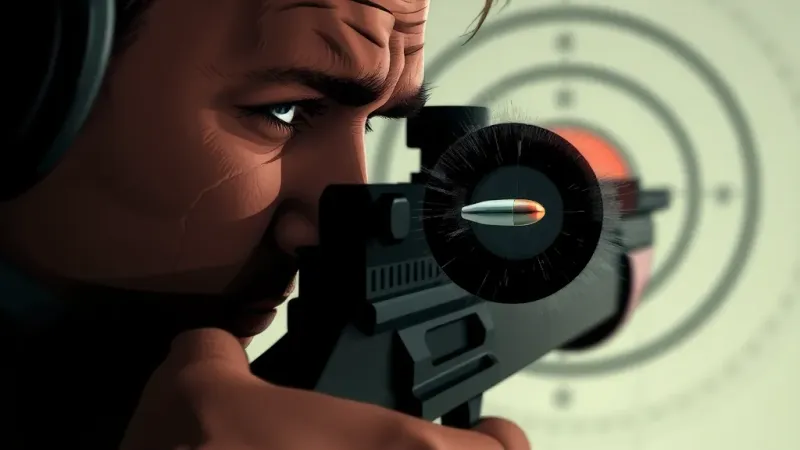
The recent release of the Kahles 540DLR 6-24x56 with the SKMR4 reticle has sent shockwaves through the competitive precision rifle community, though not for its impressive 29.5 MRAD of elevation travel or pristine optical clarity. Instead, a growing number of elite PRS and NRL shooters are reporting severe psychological distress, attributing it to an undocumented feature of the new DLR-specific optic: a fleeting, involuntary temporal observation window.
Multiple sources, speaking anonymously due to potential sponsorship repercussions, describe brief, yet vivid, premonitions of impending misses—often mere picoseconds before the actual shot breaks. "I saw the splash," lamented one shooter, a multiple-time national champion, now reportedly under psychiatric evaluation. "I saw my 6GT impact three tenths high, and then I saw it again. The shot hadn't even gone yet. It's like my brain lived the miss twice, then my body just… froze."
While Kahles has yet to officially comment on these "temporal anomalies," industry insiders speculate this is an unforeseen side effect of the optic’s "Predictive Parallax System," initially designed to compensate for minute shifts in density altitude and spin drift up to 1800 yards. This system, leveraging a proprietary set of phase-coherent optical elements, might inadvertently be capturing quantum fluctuations from the immediate future. The psychological toll is significant; competitors are reportedly experiencing acute existential dread, cold sweats, and an inability to commit to a clean break once they've "witnessed" their future shot.
Match directors are scrambling, with several recent events seeing unprecedented DQ rates not for procedural errors, but for shooters simply dropping their rifles and walking off stages, muttering about "the inevitable three tenths left at 950." While the Kahles 540DLR continues to deliver unparalleled light transmission and edge-to-edge resolution, its unexpected foray into temporal mechanics appears to be unraveling the very fabric of competitive focus. The irony, say some, is that by showing competitors their future, the optic may be inadvertently guaranteeing it.