“Young Gun” Chad “Chadwick” Thompson, a multi-time PRS Pro Series finalist known for his Terminus Apollo Lite action barreled with a 26-inch Krieger M24 contour, arrived at the 2024 National Palma Championships, fully confident his applied ballistics prowess would translate. His load, a 6BRA pushing 105gr Hornady BTHPs at 2950 FPS with an SD of 3.2 FPS and ES of 9 FPS, was meticulously trued, ready for what he believed was just another long-range challenge.
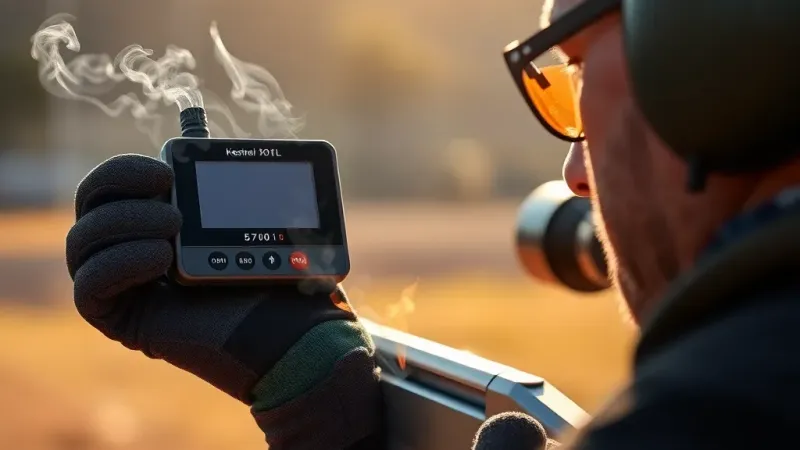
The initial shock at the 800-yard line was palpable. Thompson, accustomed to his Nightforce ATACR 7-35x56 Mil-XT and laser-rangefinder-fed DOPE, struggled with the array of baffling wind flags and absence of barricades. “Where’s the scope cam feed?” he was heard muttering, attempting to dial non-existent turrets. During his first string, Thompson’s Kestrel 5700 Elite, reportedly overtaxed by the lack of digital reticle input and unable to calculate spin drift for a *human-estimated* hold, began emitting a high-pitched whine. Sources confirm a small plume of smoke followed, the device shutting down permanently.
Match Director, Colonel Mildred “Millie” Perkins (retired), a multi-time Palma champion, observed Thompson attempting to true his internal iron sight data based on an “intuitive feel” for density altitude. “The young man claimed his 155gr Sierra Palma bullets were somehow ‘under-performing’ because he couldn't see the Coriolis effect in his scope,” Perkins stated dryly. Thompson ultimately zeroed an entire 20-round string 30 MOA low, having confused “elevation adjustment” with “how high the target looked.”
The official statement declared Thompson's DQ was due to “catastrophic digital-to-analog interface failure,” a finding supported by his tearful confession of being “unable to process a wind call without a digital solution.” The incident has sparked industry debate on whether competitive shooters should be trained to mentally calculate bullet drop without a heads-up display, or if such “primitive” skills are now irrelevant.