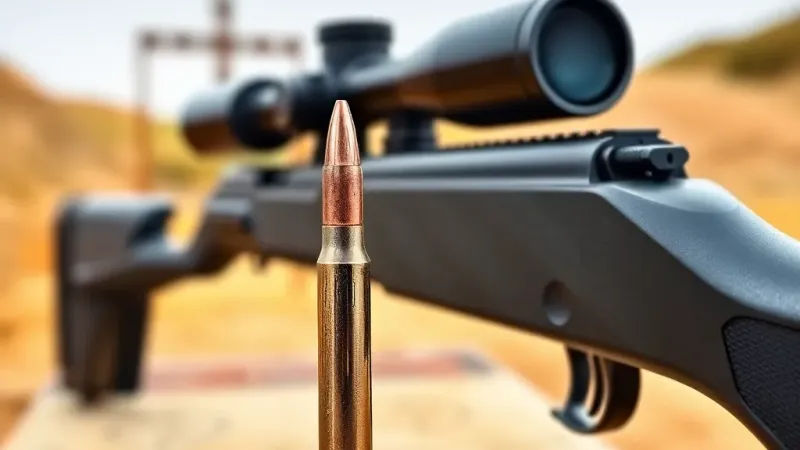
The recent test of a Savage 110 Carbon Predator chambered in .223 Remington, deploying 90-grain Sierra MatchKings, has sent ripples through the PRS community, though perhaps not in the way its proponents intended. Sources close to the project report the rifle, featuring a factory 1:7 twist rate within its 22-inch carbon-wrapped barrel, consistently achieved sub-0.75 MOA groups at 100 yards with a reported muzzle velocity average of 2580 FPS. This performance metric has led one competitor, who wished to remain anonymous but hinted at a "multi-year data collection initiative," to declare the platform "fully capable" of challenging current Open Division titans running 6 Dasher or 6GT.
The competitor, reportedly truing extensive DOPE for targets out to 1200 yards, insists that the minimal recoil impulse of the .223, combined with the "mythical stability" of the 90-grain projectiles, will provide an insurmountable edge in rapid positional follow-up shots. Their meticulously crafted DOPE card, derived from a single 5-shot group at 100 yards and then extrapolated, reportedly shows a staggering 40+ MRAD of elevation required at extreme distances, which they claim "emphatically proves the bullet stays supersonic long enough, even in high density altitude conditions." They also noted a complete absence of Coriolis effect, attributing it to the "pure, unadulterated rotational inertia" of the heavier projectile.
While traditional wisdom dictates favoring cartridges like the 6.5 Creedmoor for their vastly superior G7 ballistic coefficients and terminal energy retention beyond 800 yards, the unnamed enthusiast remains undeterred. "The less weight, the more accuracy principle is a red herring from the old guard," they explained, gesturing vaguely at a heavily modified ballistics app on their phone. "It's about *dense* weight and spin drift cancellation through brute force." The community now awaits with bated breath to see if the Savage 110 Carbon Predator, in its current configuration, can indeed overcome the laws of physics, 20-30 MPH crosswinds, and the inherent limitations of the .223 Remington at upcoming major matches, particularly on stages featuring 2 MOA targets at 1000 yards, where early reports only indicate impressive splash visibility on the backstop, not the steel.