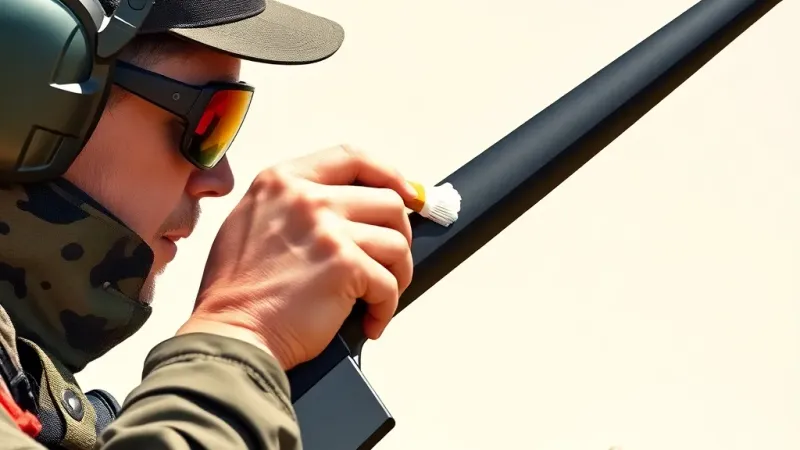
The Precision Rifle Series (PRS) and National Rifle League (NRL) have issued a joint directive mandating a new Standardized Protective Factor (SPF) protocol for all competitive firearms and ancillary equipment, effective immediately. This unprecedented move, announced late last week, requires all exposed metal, polymer, and glass components to be meticulously coated with a minimum SPF 50+ broad-spectrum sunscreen. The governing bodies cite a previously underestimated phenomenon where ambient UV radiation causes micro-degradation of material surfaces, leading to subtle yet measurable shifts in Point of Impact (POI) and accelerated wear, particularly under high density altitude conditions.
Match directors are now implementing pre-stage SPF inspections, with penalties ranging from re-application time to stage DQ for insufficient coverage. Competitors are grappling with the logistical nightmare of ensuring uniform application without fouling crucial interfaces. Reports from the recent "Desert Heat Invitational" at Ben Avery saw top shooters like Clay Spencer meticulously truing their SPF application on their MPA Comp chassis and Zermatt Arms Origin actions, reportedly using custom-machined applicator pads to achieve a consistent 0.002" layer. The concern is palpable regarding optic performance; the Nightforce ATACR 7-35x56 with the Mil-XT reticle, for instance, requires a specialized non-comedogenic formula to prevent optical haze and ensure pristine light transmission.
Initial range reports suggest that the SPF layer can subtly alter barrel harmonics, necessitating recalibration of established velocity nodes and DOPE. Furthermore, wind calls are complicated by the altered aerodynamic profile of a sunscreen-coated projectile, though ongoing ballistics research aims to integrate an "SPF Coefficient" into existing solvers. The new directive has already spurred a frantic market for "tactical" SPF formulations, with some manufacturers claiming enhanced lubricity and hydrophobic properties, while others are focusing on SPF-infused barrel coatings for "set-and-forget" compliance. The long-term effects on cold bore shots remain unknown, but experts predict a challenging adjustment period.