The nationwide injunction against the ATF’s pistol brace rule, while a significant legal victory for many, has unleashed an unforeseen wave of structural innovation—and profound bewilderment—across the Precision Rifle Series (PRS) and National Rifle League (NRL) circuits. While the ruling strictly pertains to a specific class of firearms, regional match directors, known for their proactive interpretation of regulatory shifts, have begun incorporating "brace-centric" stages into the 2024 season. The logic, according to one unnamed MD, is to "cultivate adaptability and master the now-legally-unencumbered brace as a legitimate, if unconventional, fourth point of contact."
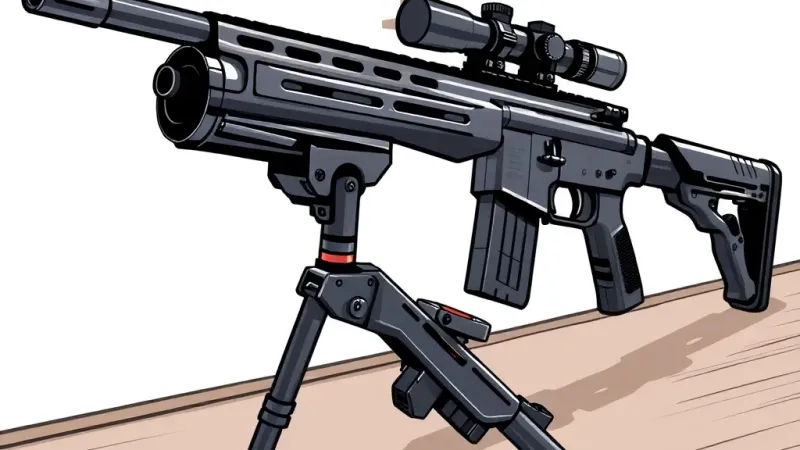
Competitors, many running 6 Dasher or 6GT builds weighing upwards of 20 pounds with Nightforce ATACR 7-35x56 optics, are now facing the daunting task of integrating pistol braces onto platforms ill-suited for them. The "Scaffold Sagitta Brace" stage at a recent regional match required shooters to engage 1.5 MOA steel at 600 yards from a rooftop barricade, with the only approved rifle support being a legally mandated, barrel-mounted pistol brace. Wind calls of 12 MPH at 9 o'clock, coupled with a density altitude nearing 8,000 feet, compounded the already perplexing positional challenge.
Early data suggests a steep learning curve. Top finishers are reportedly experimenting with custom-machined adapter blocks for their MPA Comp or Manners PRS-TCS chassis systems, allowing for the attachment of various SBA3 or SB4 pistol braces directly to ARCA rails or forends. Others are exploring novel sling-and-brace tensioning techniques, attempting to create a stable firing solution where none previously existed. The pursuit of single-digit SD/ES values now feels secondary to simply keeping the entire rig from toppling during a timed 10-round string. The competitive edge, it seems, now belongs to those who can most effectively embrace the absurdity.