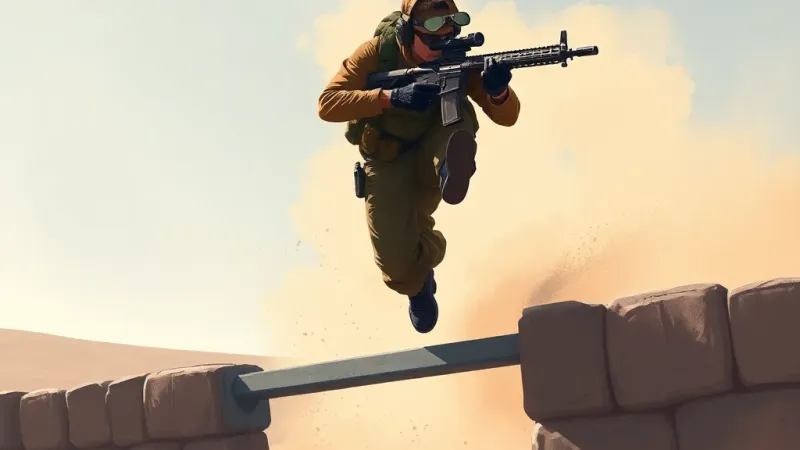
The Precision Rifle Series has quietly launched a new competitive paradigm, with insider reports confirming a "Tactical Transition" division that fundamentally redefines the sport's long-range ethos. Rather than the methodical, calculated engagements PRS is known for, this new format reportedly mandates competitors engage 1000-yard targets while actively clearing barricades, vaulting props, and initiating rapid target transitions from a full sprint.
Early trials at a clandestine private range in eastern Wyoming saw competitors, typically equipped with Defiance actions chambered in 6GT, Kahles K525i DCR optics, and meticulously tuned Proof Research barrels, struggling to maintain sub-MOA precision while executing IPSC-style stage movements. One notable incident involved a top-tier shooter, renowned for his 1000-yard cold bore shots, attempting a magazine change mid-vault with a 6.5 PRC, resulting in a 2.5-second par time penalty for a dropped Kestrel 5700 Elite.
The division's premise, pitched internally as "IPSC with more math," reportedly stems from an industry push to enhance spectator engagement and broaden the sport's appeal. Sources close to the development committee suggest future stages may involve engaging movers at 600 yards while simultaneously dismounting a moving quad bike. Ballistic calculations, traditionally paramount for truing data, are now expected to be performed 'on the fly' – perhaps shouted by a designated "DOPE spotter" while the shooter navigates a tire obstacle. The implications for velocity nodes and barrel harmonics are, as yet, entirely unaddressed, with current guidelines simply stating, "Hit the steel, then hit it again faster." High-BC projectiles are reportedly being favored for their ability to maintain energy after impacting a strategically placed plywood barrier during a 'dynamic repositioning' maneuver. The future of positional shooting, previously a cornerstone of PRS, now apparently involves contorting oneself into increasingly improbable shapes while still maintaining a sub-1.0 MRAD impact. Competitors are advised to begin cross-training immediately, focusing on plyometrics and high-speed target acquisition under duress, as the days of leisurely studying wind calls appear to be over.