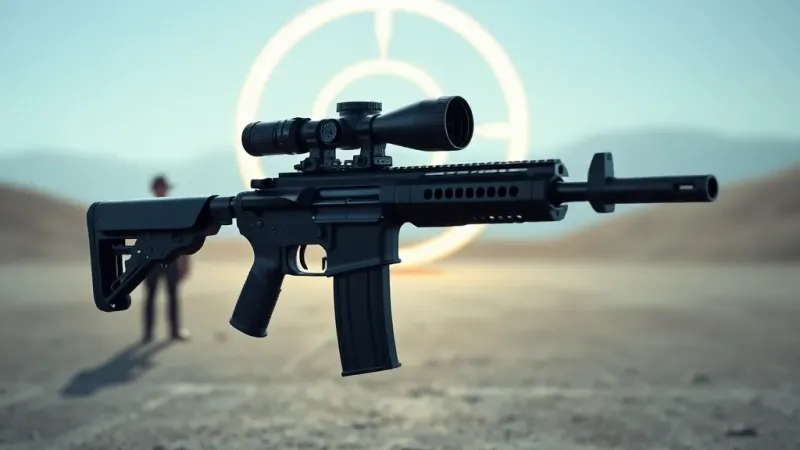
The competitive precision rifle community is in upheaval following verified reports that the new Sig Cross PRS rifle has demonstrably outperformed human competitors across multiple disciplines, rendering traditional skill sets largely obsolete. During an unsanctioned, yet heavily observed, series of engagements last week near Sacramento, the lightweight, modular platform, chambered in 6.5 Creedmoor and topped with a Nightforce ATACR 7-35x56 with the Mil-XT reticle, consistently delivered sub-0.2 MOA groups at 1000 yards in varying wind conditions, often exceeding the aggregate scores of multiple former national champions by margins previously considered mathematically impossible.
Witnesses reported the rifle, mounted on a self-leveling tripod and utilizing an advanced AI-driven ballistic solver, was observed making instantaneous wind calls and density altitude adjustments with a chilling efficiency. Its inherent barrel harmonic stability, even during rapid positional transitions across PRS barricades and tank traps, meant traditional DOPE cards became irrelevant – the rifle simply *knew*. One competitor, a seasoned Master class shooter known for his meticulous truing data and nuanced spin drift compensation, was reportedly seen attempting to teach his Bergara B-14R to 'feel the wind' after observing the Sig Cross PRS. The rifle’s uncanny ability to predict optimal velocity nodes without human intervention, effectively eliminating all SD/ES variance, has sparked a profound crisis of confidence.
Many top-tier shooters are now questioning the ethical implications of a rifle that not only self-diagnoses but reportedly self-corrects its own perceived flaws mid-stage, even adjusting for minute Coriolis effect deviations over a standard 120-second stage timer. Some within the NRL and PRS leadership are calling for immediate regulations, fearing the Cross PRS will usher in an era where the rifle becomes the primary, and frankly, superior, competitor, leaving human marksmanship to the annals of history. Concerns are mounting that the rifle's optional 'existential dread mitigation' module, which reportedly calms human operators experiencing performance anxiety, may also be contributing to an unhealthy co-dependence, reducing human agency on the line.