The Nightforce ELR Steel Challenge, known globally as the pinnacle of precision long-range engagement, is once again pushing the boundaries of competitor preparation. With targets spanning from 1,000 to over 2,000 yards in the notoriously unpredictable Wyoming high desert, elite shooters are now reportedly undergoing experimental optic-brain interface surgery to gain a fractional-MOA advantage. This groundbreaking, albeit invasive, procedure is seeing athletes like reigning champion Marcus "Trigger Finger" Thorne opting for direct neural linkage to their primary optics, specifically the Nightforce ATACR 7-35x56 with the Mil-XT reticle.
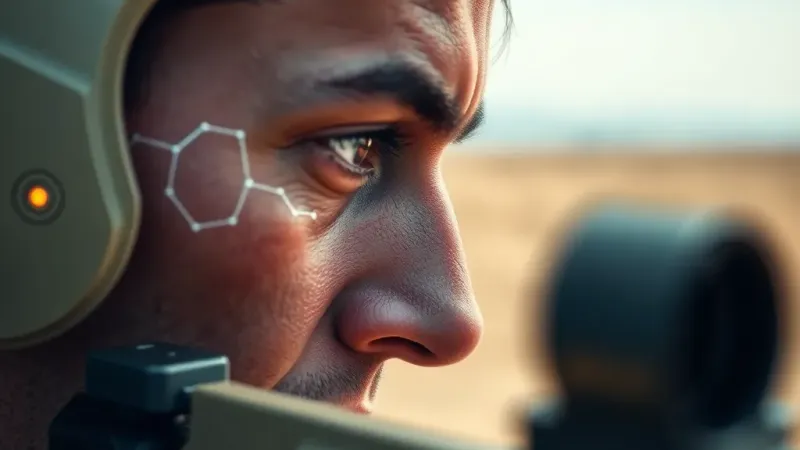
The procedure, developed by a clandestine consortium of neuro-optic engineers, involves the implantation of a micro-synaptic shunt directly into the visual cortex. This shunt is then wirelessly paired with a modified optic's internal processing unit, allowing for instantaneous data transfer and pre-visual computation. Proponents claim a reduction in neural latency for parallax adjustment and a demonstrably truer interpretation of atmospheric disturbances. "My brain is now effectively a tertiary processor for the ATACR's XT reticle," explained Thorne, meticulously truing his 6.5 PRC load data, post-surgery. "I can detect a 0.2-MRAD mirage shift faster than traditional ocular-cortex processing, and the system now feeds anticipated wind flags directly into my optic's internal display, pre-calculating lead for the second shot before the first bullet even impacts. The system even accounts for spin drift and real-time Coriolis adjustments based on my cranial gyros."
This radical bio-integration promises to redefine the competitive edge. Skeptics point to potential long-term neural instability and the ethical implications, but competitors are weighing such concerns against the imperative to shave milliseconds off their target acquisition and environmental data assimilation. With the challenge’s stages demanding sub-MOA first-round impacts on distant steel, the future of ELR might well be less about the shooter, and more about the interconnected neural network feeding the next shot. The 2024 event promises to be a true test of not just skill, but also surgical resilience.