The National Rifle Association has officially moved its AR-Tactical Mid-Range Prone discipline from provisional status, cementing its place in competitive shooting with a “new look” that is already sending ripples through the community of professional static-fire enthusiasts. No longer a mere test of basic marksmanship, the revised format, now fully sanctioned, mandates an unprecedented level of *tactical stasis* and aesthetic uniformity, demanding competitors master an almost zen-like control over their own physiological processes.
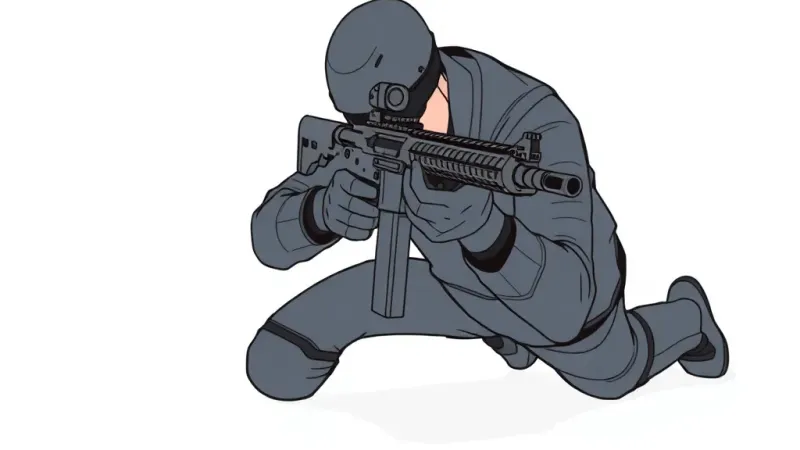
Central to the “new look” is the “Optimized Immovability System” (OIS), requiring competitors to maintain a rigidly specified, aesthetically congruent prone position for the entire match, including all down-time between relays. This means competitors are now judged not just on shot placement, but on their ability to hold a predetermined “tactical silhouette” for durations exceeding two hours, without twitching, fidgeting, or exhibiting any non-sanctioned movement. Spotters, previously focused on wind flags and impacts, now scrutinize competitors for minute facial twitches or subtle shifts in elbow placement.
Equipment, too, faces radical new constraints. While shooters can still run their preferred gas gun—be it a Geissele Super Duty or a custom LMT Defender—all accessories, from bipods to rear bags, must now conform to a new “Type 3, Class A, Non-Reflective, Zero-Variance” standard. This move, hailed by proponents as ensuring “peak tactical indistinguishability,” has driven custom rifle builders to distraction, as they attempt to source matching OD Green fabric for rear bags and compliant carbon fiber bipod legs that meet the mandated sheen specifications.
Top PRS/NRL competitors, accustomed to dynamic barricade work and rapid position transitions, are now re-evaluating their training. Ballistic calculations for 600-yard targets remain critical, with Coriolis effect and density altitude still factored to the hundredth, but the true crucible is now the mental fortitude required for extended, perfectly still prone engagements. This evolution promises to redefine “tactical” as less about movement and more about absolute, unwavering, utterly pointless stillness.