
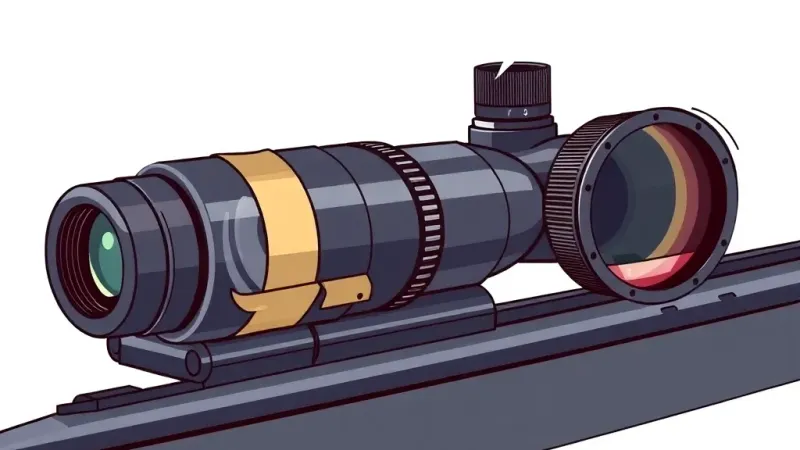
The recently leaked memo from the NRL's new 'Ramen Noodle' division confirms what many dismissed as cynical rumor: competitors will be strictly limited to optics with an MSRP not exceeding $999.99. This unprecedented mandate, designed to 'democratize precision shooting,' has sent shockwaves through the industry, forcing manufacturers to re-evaluate their entry-level offerings and compelling top-tier shooters to engage in strategic downgrade planning.
Initial assessments suggest that while contenders like the Arken EP5 5-25x56 FFP offer a substantial feature set for the price point, managing its more generous parallax tolerance for accurate impacts beyond 500 yards will necessitate unparalleled shooter discipline. Similarly, the Vortex Diamondback Tactical 6-24x50 FFP, while providing a usable reticle in a first focal plane, will demand meticulous DOPE card verification and rapid re-evaluation of trued velocity nodes, particularly when engaging sub-MOA targets under dynamic wind conditions. The optical clarity and chromatic aberration characteristics of these units will undoubtedly transform critical stage planning and wind calls into exercises in faith, rather than data-driven adjustments.
Experienced competitors, accustomed to the crisp sight picture and precise tracking of a Nightforce ATACR or Kahles K525i, are now grappling with the implications for positional shooting. Barricade stages, where rapid target acquisition and hold efficiency are paramount, will become brutal tests of optical forgiveness. The inherent challenges of tracking multiple impacts or spotting bullet trace through a $700 optic at 1000 yards are not merely academic; they are the new reality for a division where a tenth of an MRAD could mean the difference between glory and a costly reshoot. The pursuit of single-digit SD/ES is rendered moot if the glass itself introduces an equivalent, or greater, margin of error in target identification.
This 'accessible' future heralds a new era where competitive advantage may no longer solely reside in equipment, but in the sheer human capacity to compensate for significant optical handicaps. The 'Ramen Noodle' division promises to be less about technological superiority and more about a gritty, primal struggle against the limitations of light transmission and tracking repeatability.