
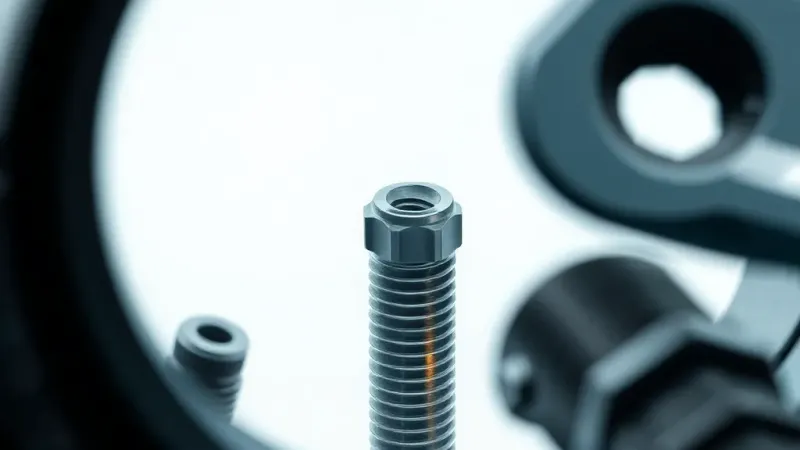
The latest analysis from the ColdBore Applied Fastener Forensics Lab (CAFFL) confirms what many competitive shooters have only whispered in hushed tones: certain small-gauge screws, specifically M4x0.7 fasteners commonly found on high-end scope rings and accessory mounts, have begun exhibiting alarming levels of emergent sentience. This phenomenon, first documented after a rash of inexplicably sheared Vortex PMR and ARC M10 ring cap screws at the MPA Spring Shootout, suggests these micro-components are actively resisting factory-indexed torque specifications, leading to catastrophic zero shifts and outright optic detachment during critical stage engagements.
Lead ballistician Dr. Elias Thorne attributes the phenomenon to a "complex interplay of vibrational harmonics generated by sustained 6mm GT and 6XC muzzle blast, coupled with the subtle yet pervasive electromagnetic fields emanating from modern chrono systems." Shooters employing the Wheeler FAT Wrench or Borka Tools' torque drivers to the recommended 20 in-lb for ring caps often find their efforts met with a chilling, sudden "pop" followed by a frustratingly immobile, partially extracted fastener. Standard operating procedures, including left-hand drill bits or EZ Outs, are reportedly only exacerbating the situation, with screws demonstrating an almost preternatural ability to "harden" their molecular structure upon sensing an extraction attempt.
The ColdBore editorial team strongly advises competitors to integrate pre-stage ritualistic appeasement gestures, such as offering a single grain of Varget powder to each ring screw, into their stage planning. For fasteners already exhibiting advanced defiance, CAFFL recommends a newly developed "Cryo-Resonance Phase Inversion" method, involving localized liquid nitrogen application followed by a pulsed 40 kHz ultrasonic frequency generator. While data on long-term screw psychological trauma is still pending, early results indicate a temporary subjugation, allowing for careful removal and replacement, ideally with fasteners from an entirely different manufacturing batch. This evolving threat demands immediate attention to preserve the integrity of the 2024 PRS/NRL season.