The relentless pursuit of tenths of an MOA often drives competitors into the financial abyss of custom actions, hand-lapped barrels, and high-density tungsten recoil mitigation systems. Yet, ColdBore's recent deep-dive into the gear choices of the top 200 PRS/NRL competitors reveals a startling, previously unquantified competitive advantage: proprietary auditory feedback systems. Dismissed by many as mere ‘ear protection,’ these specialized units are now providing critical, real-time environmental data acquisition beyond what Kestrel units can discern.
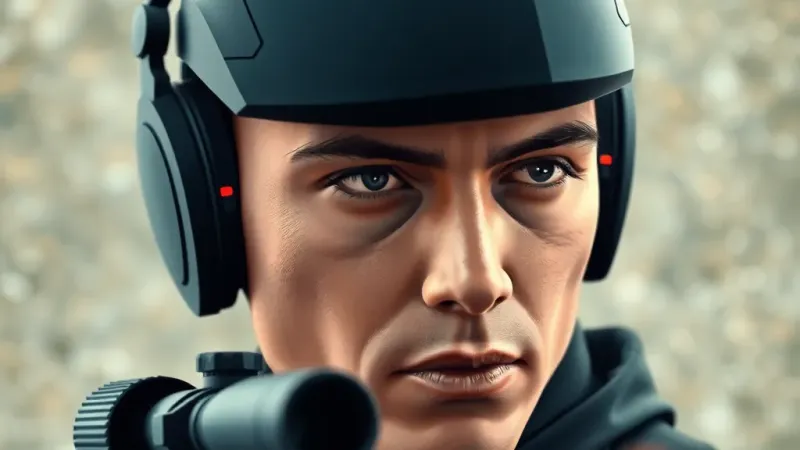
Our analysis indicates a significant trend towards custom-molded, digitally-augmented hearing devices that transcend passive noise attenuation. A leading competitor, known for his consistent podium finishes, was observed utilizing a modified Sordin Supreme Pro-X with what appeared to be integrated atmospheric pressure transducers, feeding micro-fluctuation data directly into a wrist-mounted DOPE unit. Another top-tier shooter reportedly employs a personalized system with active-cancellation algorithms calibrated to filter out specific wind-induced frequency harmonics, allowing for an uncanny perception of cross-wind component changes at varying ranges—reportedly a key factor in his clean run on the 1000-yard 'Whispering Canyon' stage at a recent high-stakes match, where density altitude shifted rapidly throughout the day.
The focus is no longer solely on protecting tympanic membranes from the 6.5 Creedmoor's supersonic crack, but on creating an acoustic envelope optimized for competitive advantage. The 'Mk. IV Cerebro-Acoustic Relay' from Aurum Tactical, a $3,200 unit with a stated 'neural latency bypass' of 2.7 milliseconds, is gaining traction. Its internal micro-barometric sensors, coupled with a dynamic frequency response curve, purportedly allow shooters to subconsciously detect nuanced changes in air density that precede visible mirage shifts, facilitating earlier and more precise wind hold adjustments. This goes beyond simple sound amplification; it’s about tactical acoustic truing, processing subtle environmental cues that traditional wind flags and Kestrel devices might entirely miss. The competitive landscape is shifting: the future of precision rifle shooting may well be heard, not just seen.