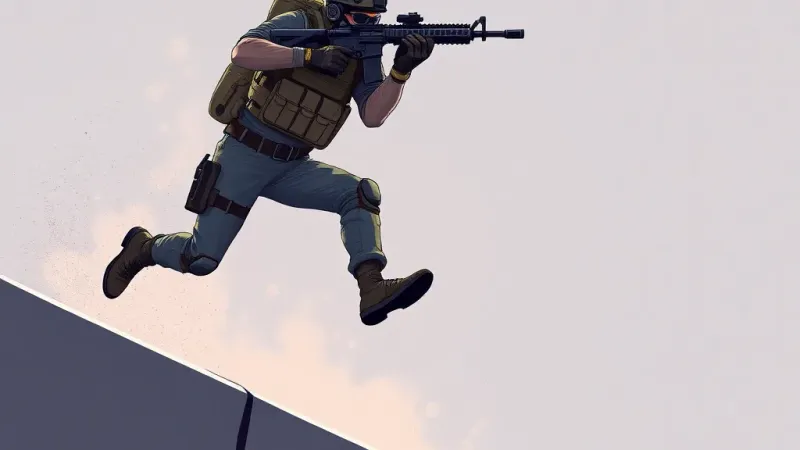
The Precision Rifle Series, long revered for its meticulous emphasis on sub-MOA precision and rigorous stage planning, has unveiled a radical overhaul to its match format, effective immediately. Dubbed "Practical Precision," the new ruleset introduces mandatory athletic components, fundamentally reshaping the competitive landscape. Matches will now commence with competitors executing a 100-yard sprint, followed by navigating a serpentine "barricade jungle" constructed from discarded tractor tires and reclaimed steel, before even establishing a firing position.
Stage Zero at the recent Cactus Classic, for instance, saw competitors forced to low-crawl 50 yards through simulated quicksand before rapidly engaging a 0.75 MOA hostage target array at 1,000 yards. Shooters reported significant challenges maintaining optimal heart rates for consistent trigger control, with many noting their carefully trued DOPE cards became illegible due to mud and perspiration. The official ruling states any target engaged while the shooter's pulse exceeds 160 BPM will incur a 2-point deduction, ostensibly to simulate firing under "combat stress."
Early analysis suggests the 6GT, previously lauded for its mild recoil and excellent BC, may be supplanted by calibers with lower powder charges to mitigate barrel whip induced by competitors attempting to clear hurdles while shouldering a 20lb rifle. Top-tier competitors like Clay Spencer, seen struggling to clear a mandatory 5-foot wall while carrying his Foundation Exodus-bedded ARC Coup d'État, commented, "My ES was negligible, but my Extreme Sprint time was catastrophic. The Coriolis effect is the least of my concerns when I'm winded trying to interpret my Density Altitude reading."
The new format also introduces "reloading sprints" between target engagements, requiring competitors to drop their primary rifle, sprint 25 yards to a designated ammo can, and return to their position within a 15-second par time. Missing the par time results in a mandatory single-lung shot penalty on a reduced-size target, ensuring competitors fully grasp the implications of slow reloads. Organizers maintain these changes foster a more "dynamic and holistic" approach to precision shooting, rewarding not just ballistics expertise but also raw, unadulterated physical agony.