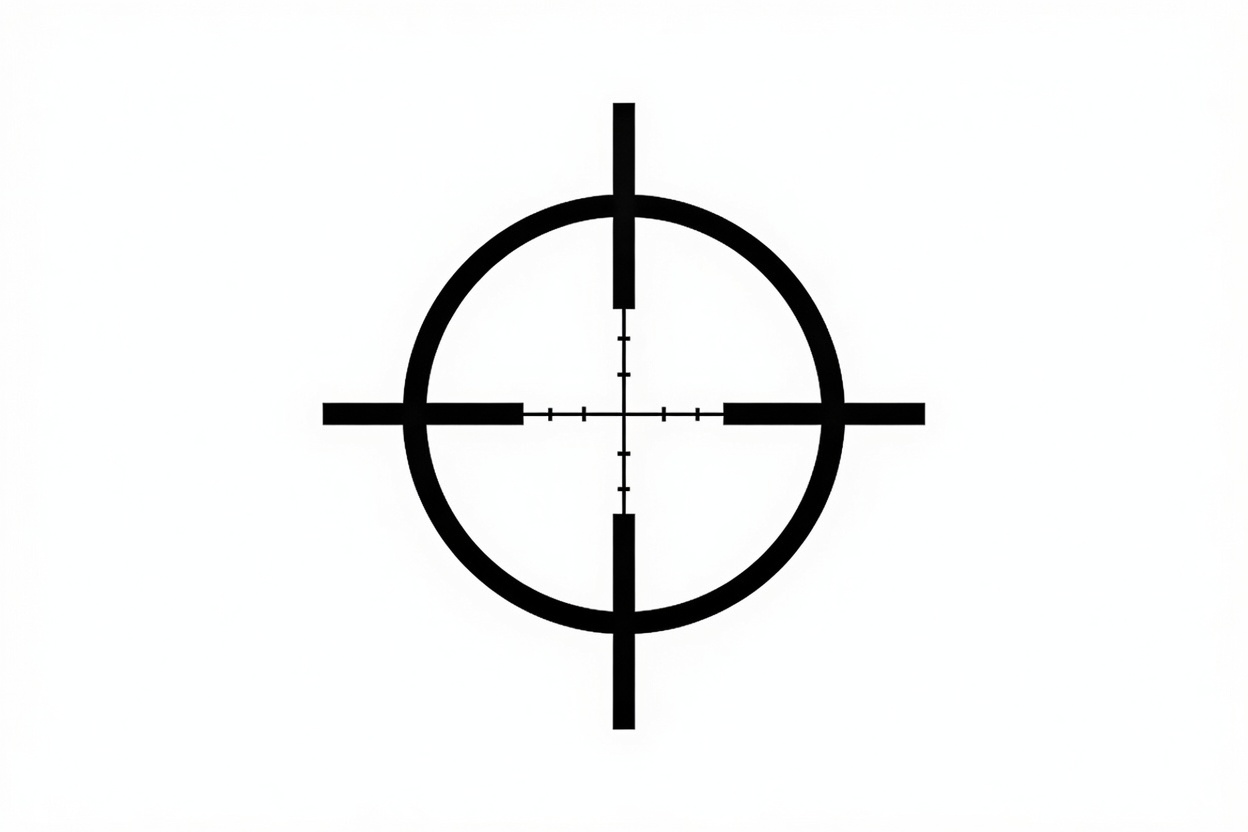

In a groundbreaking move set to redefine competitive precision rifle shooting, the Precision Rifle Series (PRS) has announced a new strategic partnership with Zeiss, ushering in the mandatory adoption of the new Zeiss Victory PRF 2-20x50 'Neural-Net' optic for all Pro Series competitors beginning the 2024 season. The controversial directive, revealed via a tersely worded press release, mandates that all competitors integrate the proprietary 'Mind-Meld' module, promising to revolutionize target acquisition and ballistic compensation.
The Zeiss Victory PRF's core innovation lies in its direct neural interface, designed to synchronize with the shooter's optic nerve pathways. This allows the scope's internal ballistic processor, featuring an advanced AI trained on thousands of data sets incorporating everything from observed BC variations to real-time Coriolis effect calculations, to bypass traditional visual interpretation. Shooters will no longer reference DOPE cards or manually input environmental data; instead, the optic projects optimized holdovers and wind calls directly into the shooter's subconscious, reportedly eliminating human error related to ranging, density altitude, and even barrel harmonics during complex positional stages. The system is also said to dynamically adjust for individual rifle quirks, learning a shooter's unique velocity nodes and SD/ES characteristics within the first 100 rounds.
Early beta testers reported a disturbing but ultimately beneficial sensation of 'pre-cognition,' where the scope seemingly predicted necessary wind calls microseconds before the brain fully processed the environmental variables. Concerns regarding potential 'scope-induced flinching' and the ethical implications of an optic dictating shot placement have been dismissed by PRS officials as 'teething issues' inherent to any paradigm shift. Compatibility with various cranial structures and optic nerve densities has reportedly led to some early competitor disqualifications, but Zeiss reassures the community that firmware updates will address these "biological variances." Sources within the PRS claim this ensures a 'level playing field' by standardizing data interpretation across the board, potentially rendering individual truing data and nuanced wind-reading skills largely obsolete. Future stages are expected to incorporate more complex barricade transitions and rapid target engagements, leveraging the optic's claimed 99.8% first-round hit probability without external human input on ballistic adjustments.