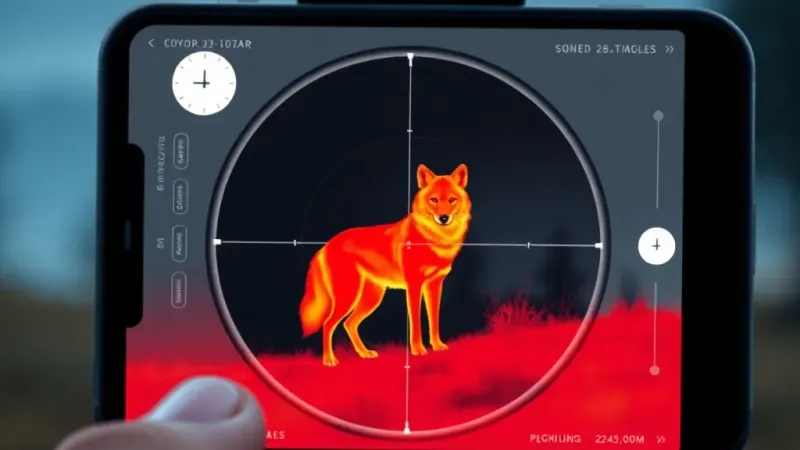
A groundbreaking iOS application, "Coyote Match Tracker," has just dropped, promising to revolutionize competitive long-range predator engagement. Developed by an undisclosed consortium of former NASA trajectory analysts and top-tier PRS shooters, the app reportedly processes live meteorological data, integrates directly with Kestrel 5700 Elite for real-time density altitude adjustments, and, critically, predicts individual coyote movement patterns based on local barometric pressure fluctuations and lunar phase. Initial beta testers report unprecedented success in cold bore shot placement on moving targets beyond 800 yards, achieving an average SD of 2.1 FPS on fur penetration.
The app's most controversial feature is its "Adaptive Pack Behavior Algorithm," which, drawing on decades of ethnographic canine data, calculates optimal shot windows for multiple targets and even suggests ideal barricade placement (e.g., "prone behind that decomposing hay bale, 45-degree cant for sustained fire on the alpha female at 970 yards"). One tester claimed the app accurately predicted a juvenile coyote's precise velocity node for a headshot at 1,120 yards, factoring in the target's pre-dinner digestion rate. The Nightforce ATACR 7-35x56 Mil-XT reticle users can even overlay a predictive thermal signature directly onto their live feed.
Critics, predominantly those who still rely on "gut feeling" and "the wind whipping through their non-digitally enhanced hair," argue the app fundamentally undermines the skill ceiling of traditional predator hunting. "It's not about the call anymore; it's about who downloads the update fastest," one disgruntled 6.5 PRC enthusiast lamented. Proponents, however, contend "Coyote Match Tracker" merely levels the playing field, allowing even novice shooters to consistently recover pristine pelts without the need for nuanced wind calls or hours spent truing data on actual coyotes. Future updates are rumored to include integrated Coriolis effect compensation for target animals moving perpendicular to the earth’s rotation and a "spin drift" module accounting for varying fur thickness.