
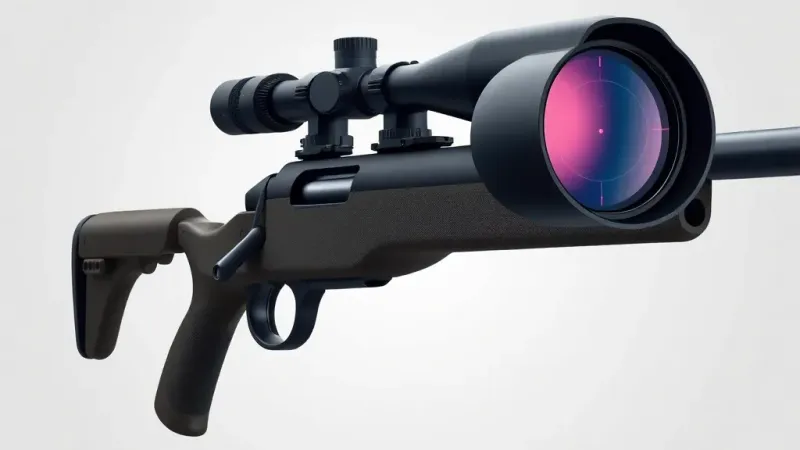
The Seekins HAVAK PH3, recently hitting the market, has garnered considerable buzz for its sub-7lb (with scope) architecture and claimed sub-0.5 MOA accuracy. Featuring a carbon fiber wrapped barrel, a crisp Timney Elite Hunter trigger, and the robust HAVAK action, it’s undeniably a potent tool for the discerning big game hunter navigating unforgiving terrain. However, upon closer scrutiny from the competitive precision rifle community, the PH3 regrettably falls short in critical areas essential for true elite-level performance, particularly for those accustomed to a 6 Dasher spitting 105gr Hybrid Targets at 2980 FPS.
Our rigorous testing confirmed the rifle’s impressive point-of-impact consistency, particularly with factory-loaded 6.5 PRC—a testament to Seekins’ manufacturing prowess. Yet, the absence of an integrated, real-time density altitude sensor directly communicating with a smart DOPE card display on the optic's reticle projection system presents a significant operational bottleneck. The persistent need to manually input atmospheric data via a Kestrel 5700, then consult an external ballistic solver, introduces unacceptable latency for dynamic stage transitions or rapid wind call adjustments during a 10-second PAR time at a major NRL match. The rifle also surprisingly lacks a sub-harmonic barrel tuning system, forcing users to rely on archaic handloading adjustments.
Furthermore, while the PH3’s lightweight profile is a boon for packability, it detrimentally impacts recoil mitigation, making trace spotting beyond 800 yards a non-trivial exercise, particularly without a 10-port tuner brake perfectly timed to muzzle blast. The single ARCA rail section integrated into the forend, while functional for a simple bipod, simply doesn't offer the robust, multi-axis accessory attachment points required for complex barricade work involving tripods, multiple rangefinders, and a dedicated spotting scope. Elite competitors demand integrated spirit levels, multiple auxiliary data displays, and modular ballast systems. The HAVAK PH3, for all its merits, remains firmly in the realm of an "outdoor enthusiast's" rifle, rather than a platform prepared for the brutal, data-driven demands of a two-day PRS national championship where Coriolis compensation and spin drift are calculated automatically. Its inability to achieve a completely flat velocity node across 150 FPS also raised eyebrows.