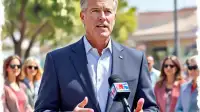


Legislation aimed at addressing veteran homelessness has been formally introduced in the United States Senate by three Democratic senators, led by Sen. Alex Padilla, who introduced the End Veteran Homelessness Act of 2026. This legislative effort comes to light as figures indicate that approximately twenty thousand nine hundred of nearly one hundred sixteen thousand funded housing vouchers remained unused as of July.
The urgency of addressing housing availability for former service members is further underscored by data regarding the unhoused population. Specifically, a January twenty twenty-five survey found thirty-two thousand four hundred ninety-five homeless veterans struggling to secure stable living conditions across the nation. Despite the existence of federal housing support programs, a significant portion of the authorized assistance fails to reach the intended recipients due to ongoing administrative and structural challenges within the delivery system.
Federal oversight reports have provided critical insight into the operational bottlenecks contributing to this persistent housing crisis. The Government Accountability Office reported a seventy-seven point four percent lease rate at the end of Fiscal Year twenty twenty-four, illustrating the gap between available resources and actual housing placements. Compounding these leasing difficulties, severe staffing shortages within the Department of Veterans Affairs have heavily strained the system's overall capacity to guide veterans through the application process. According to the findings published by the Government Accountability Office, five hundred eighty-four of four thousand one hundred fifty-nine VA case manager jobs remained unfilled at the end of Fiscal Year twenty twenty-four.
Lawmakers backing the new legislative push point directly to bureaucratic hurdles as the primary driver behind the continuous shortfall in voucher utilization. Highlighting these specific administrative barriers, Sen. Alex Padilla told a local news report, "Too many federally funded HUD-VASH vouchers are going unused every year due to red tape and outdated eligibility requirements".
Parallel legislative momentum has also emerged on the other side of Congress. The House version of the legislation, designated as H.R. nineteen fifty-seven and advanced under the leadership of Rep. Mark Takano, successfully advanced from subcommittee by voice vote on Feb. 24. Proponents of these congressional efforts emphasize the profound human impact that streamlining housing distribution can ultimately achieve. Expressing optimism regarding the broader policy objectives, Doug Collins told a local news report, "We are changing tens of thousands of lives for the better".
As the End Veteran Homelessness Act of 2026 and its corresponding House measure continue to navigate the legislative process, lawmakers, federal agencies, and community advocates remain deeply focused on resolving the persistent staffing deficits and eligibility roadblocks that have historically limited the full deployment of critical housing assistance intended to support homeless veterans nationwide.