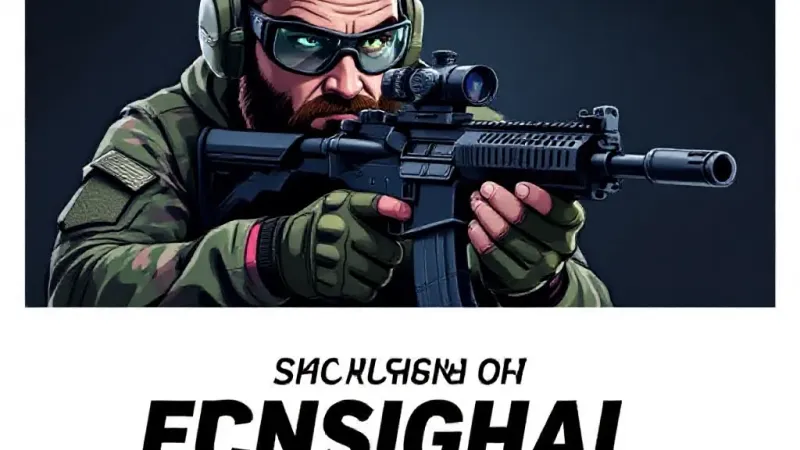
The pursuit of competitive advantage in PRS and NRL demands constant refinement of fundamental skills, often hampered by range access, ammunition costs, and recoil fatigue. Enter the high-performance PCP (Pre-Charged Pneumatic) air rifle, a category often dismissed by centerfire purists, but one with increasing relevance for disciplined skill transference. Specifically, we've put the Sig Sauer MCX Virtus PCP air rifle under the lens, not as a direct substitute for a 6 Dasher or 6GT, but as a dedicated training instrument for precision rifle fundamentals.
Initial impressions of the MCX Virtus PCP immediately highlight its ergonomic similarities to its centerfire counterpart. While significantly lighter at 7.5 lbs, the rifle provides a solid foundation for practicing positional stability, barricade manipulation, and rapid target transitions—drills often neglected due to range time constraints. The integral Picatinny rail offers ample space for a full-sized optic, crucial for replicating scope height and cheek weld of a competition rig. We mounted a Vortex Strike Eagle 5-25x56 with an MRAD reticle, confirming a consistent sight picture and allowing for familiar holdovers and wind calls.
Accuracy testing revealed the Virtus PCP to be a capable performer. Using JSB Hades .22 caliber pellets, we achieved consistent 10-shot groups averaging 0.75 MOA at 25 yards, which extrapolates to 3 MOA at 100 yards under zero-wind conditions. While this isn't centerfire precision, the tight grouping at its effective training range is more than sufficient for identifying shooter error in trigger control and natural point of aim. Velocity consistency, crucial for reliable pellet drop, showed an SD of 8.2 FPS over 50 shots from a full fill, translating to minimal vertical dispersion at typical air rifle distances, reinforcing the importance of consistent muzzle velocity without the financial burden of high-volume centerfire chronographing.
Where the MCX Virtus PCP truly shines is in its ability to simulate wind effects at scaled distances. Learning to read micro-flags at 25-50 yards with a light pellet provides an invaluable, low-cost platform for developing wind estimation skills that directly transfer to larger calibers at extended ranges. The negligible recoil allows for uninterrupted observation of trace and impact, fostering crucial self-correction capabilities. For those honing their stage planning or engaging multiple targets under a timer, the repetitive, low-cost trigger time is undeniable.
This isn't to say the Virtus PCP replaces live fire. It fundamentally lacks recoil management challenges, and ballistic truing beyond 100 yards requires entirely different equipment. However, for a competitor serious about perfecting their natural point of aim, refining their trigger break, understanding wind influence at an accessible scale, and practicing barricade transitions without burning expensive match ammunition, the Sig Sauer MCX Virtus PCP presents a compelling, cost-effective training tool. It’s a specialized instrument for focused skill development, not a general-purpose plinker, and its utility should be assessed through that lens by the discerning competitor.