The precision rifle community received an unexpected seismic event this week with the release of the Sig Sauer CROSS-PRS rifle. Pitched as a competition-ready platform, this new iteration of the CROSS chassis boasts an aggressive weight reduction program, resulting in a reported sub-9-pound dry weight. While other manufacturers labor to add mass for recoil mitigation and positional stability, Sig has, with clinical precision, stripped away every ounce, daring competitors to redefine their relationship with physics.
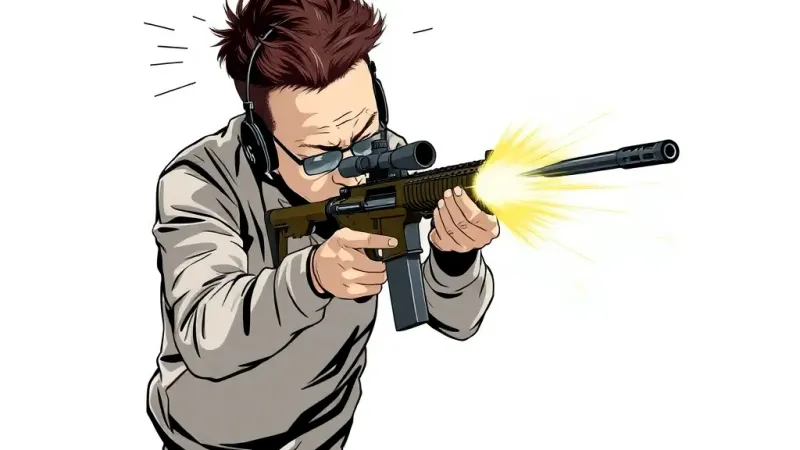
Built around the proprietary Sig CROSS action, the CROSS-PRS appears meticulously engineered to exacerbate muzzle climb and complicate follow-up shots across all standard PRS cartridges, from the 6 Dasher to the 6.5 Creedmoor. Initial reports from industry insiders suggest that validating DOPE cards will now require a spotter with a high-speed camera and a degree in astrodynamics, as the rifle’s recoil impulse promises to launch the shooter into an entirely new velocity node with each round fired. Barrel harmonics, previously a concern for concentricity, are now reportedly causing nearby wildlife to evacuate the range, mistaking the rifle for a low-frequency seismic vibrator.
This bold design choice forces competitors to adapt or perish. Positional shooting from barricades, already a test of core strength, will now demand the stability of a tripod made of adamantium and the body control of a Shaolin monk. Future match directors are reportedly exploring new stage designs involving mandatory ankle weights for competitors, or perhaps tethering rifles to concrete blocks. The CROSS-PRS is not just a rifle; it is an existential challenge to the very concept of competitive stability.