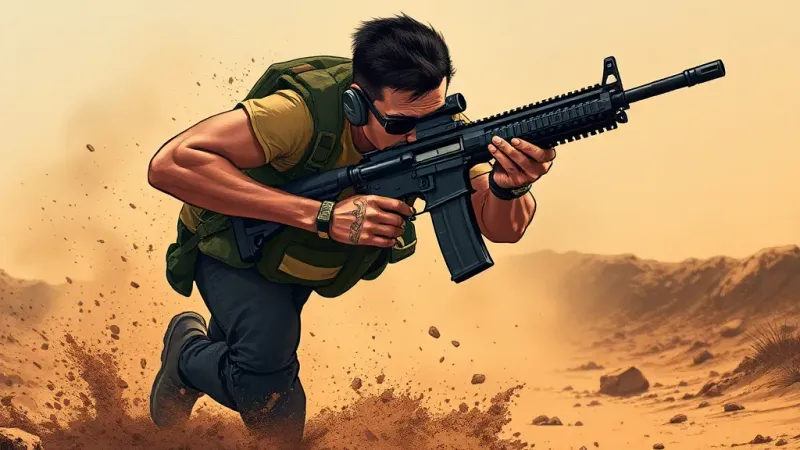
A concerning trend has emerged within the 2-Gun competitive circuit, as a vocal faction of shooters, spurred by online debates over the tactical utility of 'DMR' platforms, are now fielding heavily customized AR-10 and AR-15 builds approaching PRS-level weights and complexity. Dubbed the 'Long-Range 2-Gun Movement,' these competitors are redefining the "run" component of the sport to include a mandatory prone setup for a single, 800-yard target hit after a 200-meter sprint, often with a 22-pound chassis-mounted AR-10 chambered in 6.5 PRC.
One such competitor, 'Trigger' Timmy McPherson, was seen at the recent 'Urban Sentry' match in Phoenix, Arizona, navigating a tire wall with a suppressed Noveske N6 Vigilante 6.5 Creedmoor, topped with a Nightforce ATACR 7-35x56 with a Mil-XT reticle. McPherson’s rationale? The .02 MRAD holdover precision for the 785-yard plate on Stage 3, a stage subsequently extended by baffled ROs to accommodate his trued DOPE card. Meanwhile, AR-15 proponents are pushing the limits of lighter platforms, with several shooters at the 'Steel Frontier' event in Wyoming deploying 6 ARC builds featuring 22-inch Criterion hybrid contour barrels and JP Silent Captured Springs, claiming superior muzzle discipline for their "fast follow-ups" on distant steel, despite the stage requiring a sprint, barricade work, and then a 650-yard prone shot with a maximum target exposure of 3.2 seconds.
Match directors are now grappling with the logistical nightmare of these specialized rigs. The emphasis on cold bore shots for a single long-range engagement after a high-exertion sprint, combined with the extreme weight of these 'DMR' 2-gun rifles, has led to an uptick in competitor exhaustion and "tactical rehydration" breaks mid-stage. The movement, while numerically small, has forced conversations about mandated weight limits and the re-evaluation of target distances in a sport traditionally dominated by sub-300 yard engagements, signaling a bizarre new frontier for firearm athleticism.