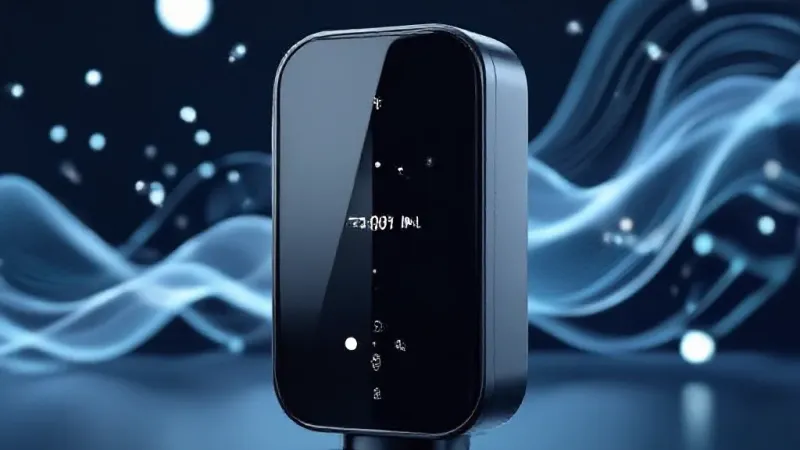
The Tactacam Wind Sensor, initially highlighted by Outdoor Life for its application in whitetail hunting strategy, presents a novel approach to localized wind data acquisition. Designed to mitigate the inconsistencies of broad-area weather forecasts, this accessory aims to provide ground-level, real-time wind telemetry. Access to the sensor's data requires a monthly subscription plan, priced at $5.
Deployment of the Wind Sensor necessitates mounting on a T-post or trail camera stake, with a T-post mount included. Users must also retain the camera's accompanying bag. The setup process is streamlined via a QR code scan, which initiates a guided calibration and connection sequence within the Tactacam Reveal app, further aided by integrated video tutorials.
Within the Tactacam app, the Wind Sensor appears nested under its synced trail camera in the 'Cameras' section. This interface displays the sensor's geographical location on a map alongside a temporal timeline of recorded wind readings. Users can request an immediate 'Wind Check' for updated data or review historical wind patterns. Physically, the sensor is distinctive, appearing as a dimpled sphere suspended on a wire within a protective cage, a departure from conventional weather station designs.
According to Outdoor Life's review, initial accuracy assessments indicated promising performance. When compared against a Vortex Ace anemometer, the Wind Sensor demonstrated congruent readings at 4 mph. Further testing, simulating high wind conditions with a leaf blower, registered a robust 40 mph, with visible agitation of the internal sphere. However, field observations in complex microclimates, specifically a creek bottom flanked by a steep ridge and pine plantation, revealed limitations. During periods of faint, inconsistent air movement, the sensor often registered 0 mph, suggesting it may not effectively capture subtle, 'mouse-fart' winds.
Therefore, the optimal deployment strategy for the Tactacam Wind Sensor appears to be in more open environments such as fields, expansive hardwoods, or wide trail intersections. In these locations, the sensor is more likely to obtain reliable exposure to predominant wind directions, yielding actionable data. While not a substitute for traditional wind indicators, as detailed by Outdoor Life, a network of these sensors could significantly enhance the understanding of real-time, localized wind conditions, offering a distinct advantage in environmental data interpretation and decision-making.