
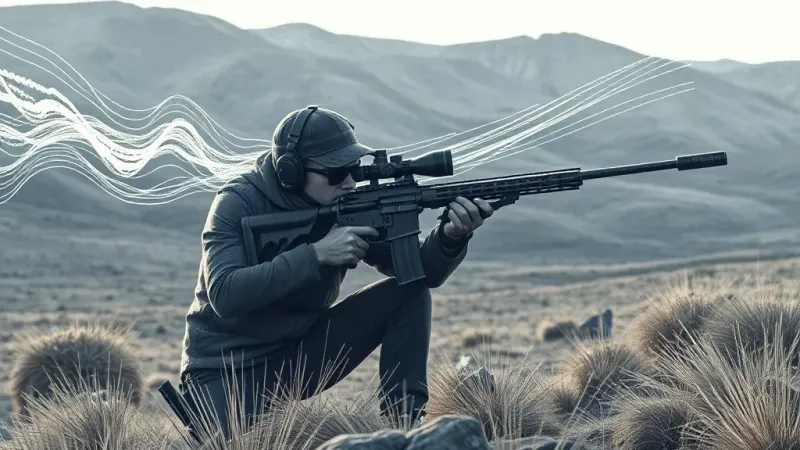
Tom Fuller's radical 'Apocalypse Now' training methodology, once dismissed as fringe preparedness fanaticism, has sent shockwaves through the competitive precision rifle circuit, as his consistent wins force top-tier competitors to fundamentally re-evaluate their approach to ballistic data and stage planning.
Fuller, a veteran of numerous national-level matches, insists that relying on digital solutions for wind calls and elevation holds is a critical failure point in a 'pre-collapse' scenario. Instead, he advocates for what he terms 'Intuitive Drift Readings' (IDR), a system where shooters internalize the external ballistics of their chosen cartridge — often a 6GT or 6.5 Creedmoor loaded with components of dubious provenance — through sheer, repetitive observation, without the aid of a Kestrel or ballistic solver. 'If the grid goes down, your Kestrel is a paperweight,' Fuller stated matter-of-factly after his recent victory at the Cactus Classic.
Stage planning under the Fuller Protocol involves assessing target arrays not for optimal firing positions, but for 'resource acquisition' opportunities — identifying potential barricade construction materials or emergency water sources. His notorious 'Scavenger's Scramble' approach to the Tank Trap at the Steel Safari, where he reportedly assembled a new firing platform from discarded targets and a competitor's lost bipod, resulted in a clean stage and a bewildered field of seasoned shooters. Competitors are now observed eyeing discarded cardboard and old tires with a newfound intensity.
Furthermore, Fuller's 'Survival Zero' concept replaces the traditional 100-yard zero with a more fluid 'functional rifle status' check, focusing on whether the rifle can reliably hit a man-sized target at an unspecified 'critical distance.' This has led to a bizarre trend of competitors arriving at matches with optics taped against impact, forgoing zero confirmation to instead 'verify weapon integrity' with dry-fire drills against the backdrop of distant, non-range-approved obstacles. The implications for competitive shooting are profound: are we training for the match, or for what comes after?