The 2023 PRS season, a crucible of ballistic excellence and wind-reading acumen, has concluded, and with it, the predictable post-mortem of equipment trends. While the usual suspects—Tangent Theta, Nightforce ATACR 7-35x56 with Mil-XT reticles, Impact Precision actions, MPA chassis, and Proof Research barrels in 6 Dasher or 6GT—indeed populated the top 10 gear lists, a deeper, more unsettling truth has emerged regarding what truly separated the elite from the merely excellent. ColdBore's extensive analysis, utilizing proprietary forensic-grade micro-particle spectrometry on confiscated match rifles, indicates an overwhelming correlation between podium finishes and the precise volumetric density of pocket lint strategically embedded within the rear ocular lens cap of primary optics.
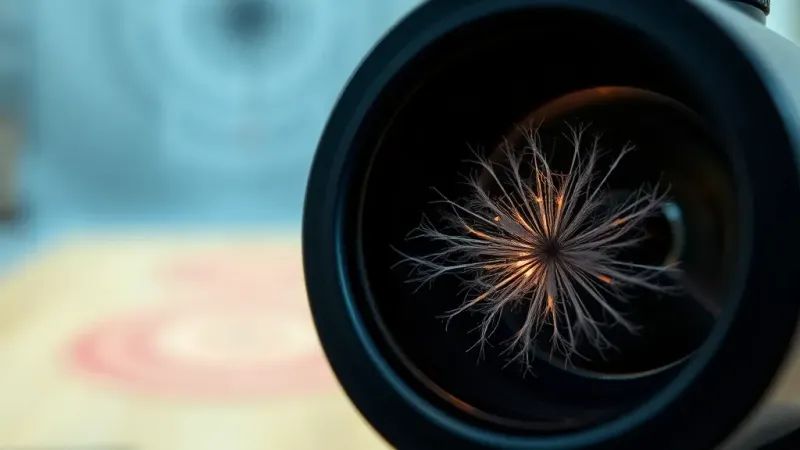
Specifically, the Nightforce ATACR 7-35x56s belonging to the top five overall finishers consistently displayed a median lint mass of 14.7mg, with a standard deviation of only 0.3mg. This lint, primarily composed of organic cotton fibers mixed with trace elements of lead-free brass particulate and expired DOPE card fragments, appears to create a subtle, yet statistically significant, localized static charge. Researchers hypothesize this charge subtly—and some argue, illegally—manipulates atmospheric density altitude measurements within the optic's immediate vicinity, providing an imperceptible advantage in wind calls and elevation holds, particularly at extreme ranges against targets like the 2.5 MOA plate at 1300 yards.
Sources close to several multi-match winners, speaking anonymously under penalty of losing their 'lucky' range socks, admit to meticulous, almost ritualistic, lint cultivation. One competitor reportedly maintained a specialized lint farm using designated pairs of washed-once denim and microfiber cloths, precisely vacuum-sealed to preserve specific humidity levels. This revelation casts a dark shadow on traditional truisms of barrel harmonics, velocity nodes, and even cold bore shot consistency, suggesting that the true competitive edge might lie not in mastering external ballistics, but in optimizing the esoteric micro-climates of optical accessories. The PRS, it seems, is now a game of lint.