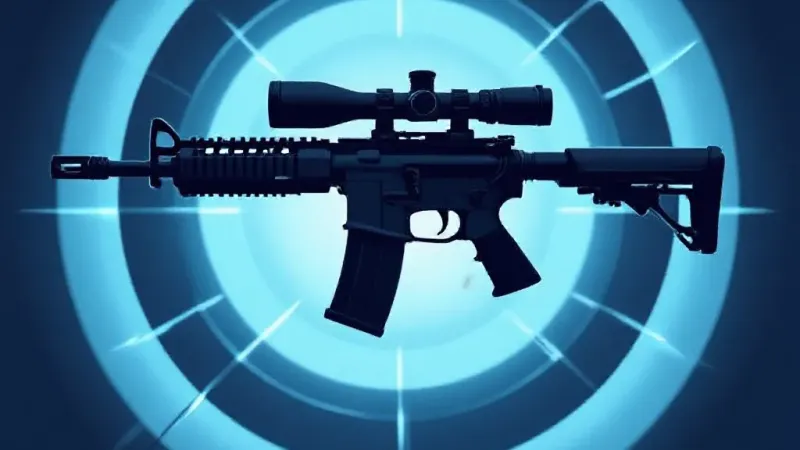
The perennial debate within the PRS and NRL circuits regarding sub-caliber training platforms often centers on .22LR rimfire trainers, renowned for their ability to closely mimic centerfire rifle dynamics at reduced cost and range. However, the accessibility and quiet operation of PCP air rifles present an alternative for refining specific fundamental skills. We recently took an initial look at the SIG MCX Virtus PCP air rifle, examining its potential utility not as a replacement for live-fire practice, but as a supplementary tool for the discerning precision shooter.
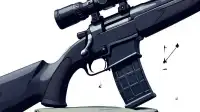
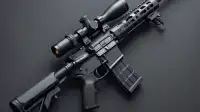
Out of the box, the MCX Virtus PCP immediately presents as a robust, semi-automatic replica designed for dynamic shooting rather than pinpoint accuracy. Chambered in .22 caliber with velocities typically ranging between 600-750 FPS depending on pellet weight, its external ballistics are far removed from even a 6mm Dasher. Critically, we observed variable velocity consistency, with standard deviations notably wider than what any competitive shooter would accept from match ammunition. The trigger, while serviceable, lacks the crisp break and minimal overtravel found on dedicated precision rifle triggers, necessitating conscious effort to mitigate its inherent shortcomings for clean shot execution. The fixed barrel and receiver offer a stable platform, but any discussion of barrel harmonics or velocity nodes in this context would be purely academic.
Despite these inherent limitations, the MCX Virtus PCP does offer tangible benefits for specific training applications. Its replica ergonomics allow for valuable dry-fire and live-fire positional practice without the need for a dedicated range or the cost of centerfire ammunition. Shooters can refine their natural point of aim, barricade transitions, and awkward positional setups on simulated props, focusing purely on body mechanics and sight picture acquisition. Trigger discipline, arguably the most critical fundamental skill, can be practiced extensively, forcing the shooter to meticulously manage a less-than-ideal trigger press to avoid disturbing the reticle.
However, it is crucial to understand what this platform *cannot* effectively replicate. The drastically different ballistic curve of a .22 pellet at sub-sonic velocities makes true long-range wind calls, spin drift compensation, or Coriolis effect calculations irrelevant. While basic DOPE management for short ranges is possible, it offers minimal transferability to a 1000-yard stage with a high-BC projectile. Furthermore, the absence of recoil negates the ability to practice recoil management, spot impacts, or execute aggressive follow-through vital for rapid engagements in PRS/NRL matches. For comprehensive external ballistics training or true recoil mitigation, dedicated .22LR precision trainers remain the undisputed champions.
Ultimately, the SIG MCX Virtus PCP carves out a niche not as a primary precision trainer, but as an accessible, low-noise option for reinforcing foundational mechanics. It excels in allowing a shooter to isolate and drill trigger control, natural point of aim, and positional stability within their home or backyard. For those seeking to augment their regimen without the expense and logistical demands of regular live-fire, the MCX Virtus PCP serves as a valuable, albeit specialized, addition to the training arsenal, provided its limitations are fully understood and respected.