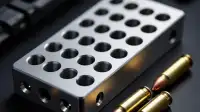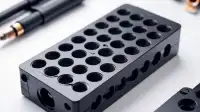
The delivery room doors had barely closed when the text from my wife came through: 'Water broke. They're prepping for emergency C-section.' My response, as any dedicated competitor would understand, was a simple, 'Roger. ETA on 6.5 PRC node validation is TBD, pending confirmation of 2880 FPS ± 2.5.' I knew what needed to be done. The Nightforce ATACR 8-32x50 with the FCR-DL reticle was already mounted to the Terminus Zeus action, bedded in an MPA Comp Chassis. My Kestrel 5700 was displaying a density altitude of 4,800 feet, identical to yesterday's range conditions.
The new batch of 140-grain Hornady A-TIPs, pushed by Hodgdon H1000 and CCI 250s in Alpha Munitions brass, demanded meticulous chrono work. ES and SD numbers for the 6.5 PRC had been stubbornly hovering around 6-8 FPS, utterly unacceptable for the 1800-yard shots I envisioned for young Juniper's future inheritance match. What kind of father would I be if her first ELR competition, decades from now, was plagued by a second velocity node not properly vetted? A solid 100-yard zero and an impeccably trued DOPE card would mean nothing if the velocity wasn't surgically precise.
While my wife navigated the complexities of childbirth, I was out at the 1000-yard line, meticulously logging chronograph data, accounting for Coriolis effect and spin drift. The thought of Juniper, one day, sending 140-grain precision downrange, her future secured by a stable velocity node, provided all the necessary motivation. The hospital called again, a nurse asking, 'Sir, your daughter's here. She's beautiful. Your wife is asking for you.' I sighed, another 5-shot group yet to be fired. 'Affirmative,' I replied, adjusting my WieBad rear bag. 'Just confirming zero before I head in. Can't risk a cold bore impacting the critical initial data set.'
The future of competitive precision shooting, after all, depends on the sacrifices made today. Some might call it extreme. I call it responsible parenting.