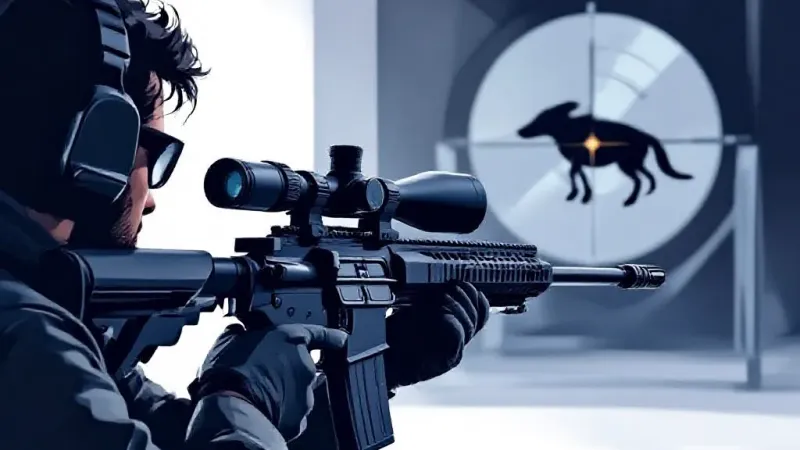
NRL Hunter, a dynamic precision shooting discipline originating in the United States, has now made its way to Italy. This new series from the National Rifle League aims to make hunting-style shooting sports more engaging by combining elements of fieldcraft with the dynamic characteristics of Precision Rifle Series (PRS) competitions.
The core philosophy of NRL Hunter centers on the ability to locate a target, quickly assess its distance, establish a firing position, and engage with precision—all without prior knowledge of the target's exact location or range. This distinguishes it from traditional firing-line competitions where target data is provided upfront, and it's not merely a transposition of PRS into a natural environment. Instead, NRL Hunter Italy defines itself as a precision shooting discipline that simulates real hunting conditions, requiring competitors to locate, identify, and hit animal-shaped targets at varying distances in a natural setting.
Perhaps the most defining aspect of NRL Hunter stages is their “blind” nature. Shooters are not given the exact distance or position of targets before starting an exercise. The Range Officer provides only a brief description and general lateral limits for the search area. Once the timer begins, the competitor must first locate the camouflaged metal targets within the environment, identify them, range them using a rangefinder, and then construct an appropriate firing position. All these steps must occur before engaging the targets, with the clock continuously running. The challenge extends beyond simply hitting a distant target; competitors must first find it.
NRL Hunter stages are not confined to a single firing point. The structure, as described by NRL Hunter Italy, includes various engagement modes: a single animal target might require four different firing positions, two animal targets might involve two positions, while a stage with four animal targets is typically engaged from one position. This encourages competitors to utilize the terrain, transforming natural elements like rocks, trees, and depressions into parts of their firing positions. The rules permit the use of environmental features and the shooter's equipment to build positions, allowing prone, sitting, kneeling, or standing stances depending on the stage design. When multiple positions are available, the competitor chooses the engagement order, making strategy an integral part of the match.
Target distances are another fundamental element. While the average target distance typically ranges between 300 and 500 meters, stages can include targets from approximately 100 up to 900 meters. The targets are animal-themed and sized to represent the vital zones of large game, with an organizational reference of about 30x30 centimeters. An example cited is a 45x30 centimeter target representing the vital zone of a large deer, emphasizing that these are not generic metal plates but are designed to reflect a hunting context.
The dynamic element is significantly highlighted by the time limits. Individual shooters have four minutes to complete a stage, while two-person teams are allotted six minutes. This time encompasses all operations: equipment preparation, target spotting, ranging, position building, and engagement. Therefore, success isn't solely about having an exceptionally precise rifle; it demands superior organization. Competitors start the stage with their equipment packed, their backpack worn, bipods folded, and tripods closed and attached to their backpacks, making gear preparation a crucial part of the overall performance.
The scoring system further emphasizes the importance of the first shot. Each target can be engaged with a maximum of two rounds. A hit on the first shot earns two points, while a hit on the second shot earns one point. If both shots miss, the target is neutralized, and the competitor moves to the next without scoring. Once a target is hit, it cannot be re-engaged. This simple formula profoundly influences the shooting approach: raw speed is insufficient. Firing prematurely without correctly assessing distance, position, and environmental conditions can lead to missing crucial points that differentiate competitors on the leaderboard.
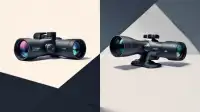
NRL Hunter distinguishes itself by not necessarily requiring purpose-built competition equipment. The matches are designed to allow participants to use and test the gear they would typically carry for hunting. Basic equipment includes a backpack, a shooting support, binoculars and/or a spotting scope, a rangefinder, a sling, and appropriate clothing. The discipline features several divisions:
* **Factory Division:** Designed for production rifles, with a weight limit of 5.5 kg for the rifle in its regulatory configuration. A specific list of approved manufacturers is provided. * **Open Light and Open Heavy:** These divisions allow for more customized rifle configurations within different weight limits. * **Team Division:** Two competitors tackle the match together. * **Skills Division:** Intended for those new to the discipline, focusing on gaining experience.
This categorical breakdown underscores a fundamental principle of NRL Hunter: performance isn't solely dependent on the intrinsic accuracy of the firearm. The rifle's weight, bulk, and configuration directly impact the competition. A heavier rifle may offer stability advantages but must be carried throughout the entire match. Conversely, a lighter system is easier to maneuver but may demand greater skill in position building. Competitors must carry all their equipment for the duration of the match, a detail that clearly separates NRL Hunter from disciplines where shooters remain predominantly on a fixed firing line.