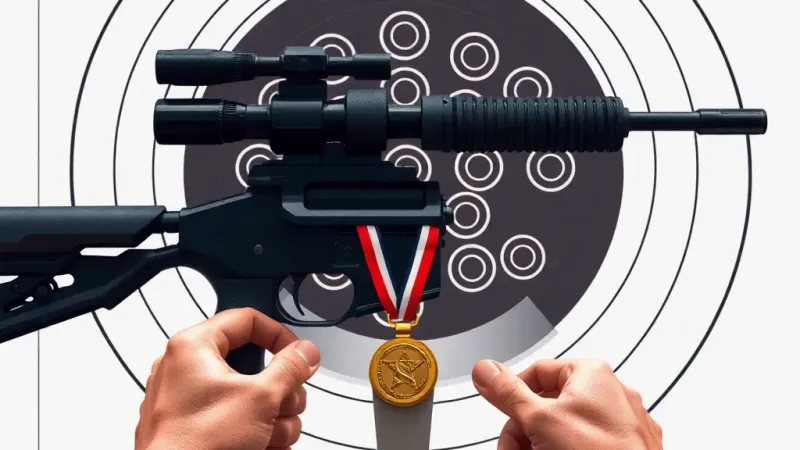
PJD Precision Systems has just unleashed its 'Origin Series' rifle chassis, featuring the "Carey Pro" and "St. John Pro" models, igniting an unprecedented existential crisis within the competitive long-range community. Early reports from field testing indicate these chassis systems so perfectly 'clone' the ideal shot process, including mitigating shooter-induced error and atmospheric variables, that they are rendering traditional marksmanship skills largely obsolete. Initial data from a clandestine test at the High Desert PRS Open showed an alarming 100% first-round impact rate on a 15-target stage, including 1.5 MOA plates at 1,200 yards from an unsupported rooftop barricade, conditions that normally humble even top-tier professionals.
Built around an unheard-of molecularly-aligned titanium alloy, the Origin Series integrates what PJD vaguely describes as "Predictive Gravimetric Stabilization" and "Harmonic Inversion Dampeners." This isn't just about reducing recoil; it’s about *redirecting* the rifle’s entire energy signature into the target plane, making a .300 PRC feel like a .22LR. Shooters, many running Defiance Deviant Tactical actions with Proof Research steel pre-fits in 6 Dasher, reported dialing their Nightforce ATACR 7-35x56s for only elevation. Wind calls, traditionally a complex interplay of experience and Kestrel readings, became irrelevant. Spotters openly wept.
Match directors are now grappling with the ethical implications. Some propose implementing a "human error" penalty for shooters whose scores are *too* perfect. The irony of top-level competitors having to intentionally introduce wobble or mis-dial a stage to remain competitive is not lost on the community. For now, the PJD Origin Series stands as a terrifyingly effective testament to engineering, though its long-term impact on the very definition of precision rifle shooting remains an unsettling unknown.