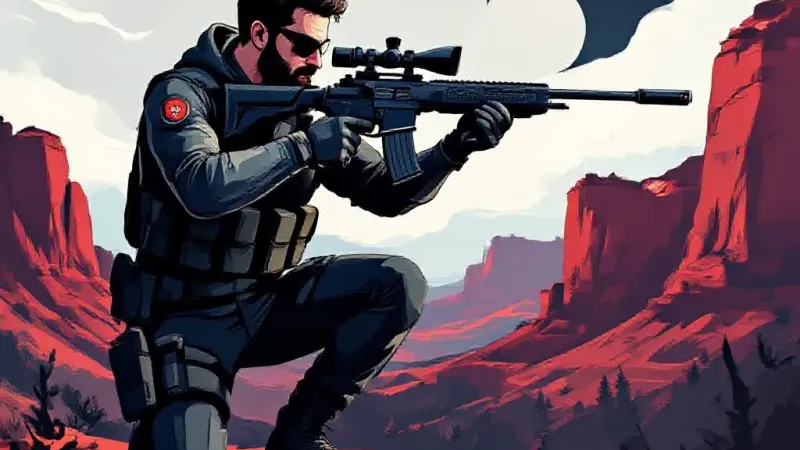
For the precision rifle community, public lands represent an indispensable crucible for honing skills that often transcend the limitations of traditional ranges. From confirming DOPE at 1000 yards to engaging steel on natural terrain, federal lands provide the vast canvases necessary for truly understanding external ballistics and developing critical positional shooting competence. Recent discourse surrounding land management changes, particularly those affecting national monument boundaries in Utah, brings the conversation about sportsmen's access sharply into focus.
These discussions underscore a fundamental truth: our ability to pursue precision rifle disciplines, both competitive and recreational, relies heavily on maintaining responsible access to these invaluable resources. While dedicated ranges are essential for initial zeroing and load development (like optimizing velocity nodes for a 6 Dasher or 6GT, ensuring minimal SD/ES), there's no substitute for real-world environmental factors. Truing data beyond 600 yards, practicing wind calls under varying density altitude conditions, and mastering barricade technique on uneven ground are best achieved on public lands where regulations permit. This requires not just physical access, but also clarity on what activities are allowed and where.
The synergy between precision rifle shooting and ethical long-range hunting is undeniable. Many competitive shooters carry their skills into the field, pursuing game with the same meticulous attention to detail: dialing for spin drift and Coriolis, understanding bullet BCs, and making precise cold bore shots count. Public lands in states like Utah offer unparalleled opportunities for this, from high-desert coues deer to Rocky Mountain elk. Ensuring these lands remain available for hunting is paramount. This isn't just about presence; it's about advocating for the management practices that support healthy game populations and the infrastructure that allows for safe, responsible pursuit.
However, access comes with significant responsibility. The ColdBore community must lead by example as vigilant stewards. This means adhering strictly to all land use regulations, leaving no trace, respecting private property boundaries, and actively participating in conservation efforts. Supporting organizations that champion sportsmen's access rights and educate policymakers on the integral role of shooting sports in land management is not optional; it’s a mandate. Whether we’re confirming our 100-yard zero before a match, or preparing for a backcountry hunt, our continued privilege to operate on these lands is directly tied to our collective actions and advocacy.
The ongoing dialogue around monument designations serves as a potent reminder that our access to federal lands for legitimate precision rifle activities is a dynamic privilege, not an inherent right. It demands our active participation in ensuring these lands remain open, responsibly managed, and understood by all stakeholders as vital to our sport and heritage.