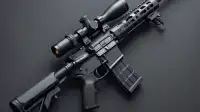
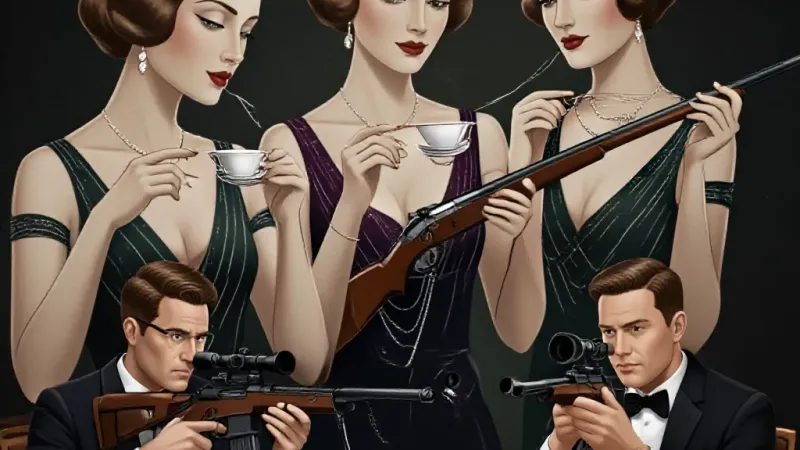
While today's PRS and NRL circuits showcase an ever-growing cadre of incredibly talented female competitors, it’s often overlooked that women have been at the forefront of precision marksmanship for generations. Long before the era of multi-stage barricade work or sophisticated Kestrel integration, a remarkable group of women were laying down sub-MOA groups and making audacious wind calls that would humble many contemporary shooters.
Picture the 1950s: a time when the precision rifle sport, as we know it, was in its infancy. Yet, in local and regional competitions, particularly in benchrest and early F-Class precursors, women were not merely participating; they were dominating. Often dismissed as hobbyists, these sharpshooters approached the craft with a technical rigor that belied the era's societal norms. They understood trajectory, honed their zero at 100, and meticulously trued their data at distance, relying on meticulous note-taking and sheer intuition in the absence of digital ballistic solvers.
Their equipment, while rudimentary by today's standards, was handled with expert proficiency. Custom-bedded heavy bench guns, often built on surplus military actions like the Mauser or Springfield, chambered in everything from .22 Long Rifle for rimfire benchrest to .30-06 Match. Optics were fixed-power, often with basic reticles, demanding an unparalleled understanding of holdovers and windage adjustments without the luxury of MRAD Christmas trees. The concept of barrel harmonics, velocity nodes, and consistent SD/ES was understood through painstaking experimentation and thousands of rounds downrange.
These women mastered the elements, not just the rifle. Their wind calls, often made by observing mirage and vegetation, were legendary. They didn't have density altitude calculators; they had an innate understanding of how temperature, humidity, and barometric pressure affected their DOPE. Positional shooting, while less emphasized than pure bench accuracy, was still a component of many military-style marksmanship events, where their steady hands and disciplined breath control shone through.
Their legacy serves as a powerful reminder that dedication to fundamentals and an unwavering pursuit of perfection transcend eras and demographics. The quiet mastery demonstrated by these women paved the way for the competitive landscape we cherish today, proving that precision is an inherent skill, not a gendered one. Their accomplishments, long overdue for wider recognition, underscore the deep roots of excellence within our sport.