The discussion surrounding reliable connections in demanding applications is ongoing, particularly with the widespread adoption of modern synthetic lines. While numerous braid-to-leader knots exist—including the uni-to-uni splice, double uni, Alberto, Seaguar, and Bristol—the FG knot has gained significant traction for its reported superior strength and reliability.
Originally a Japanese innovation, the FG, short for “fine grip,” was first popularized by Australian anglers. Their need for a knot that could both pass smoothly through spinning rod guides for long casts and withstand the strain of powerful fish like giant trevally and dogtooth tuna highlighted its distinct advantages. This dual requirement underscored its design efficacy for situations demanding both finesse and resilience.
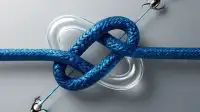
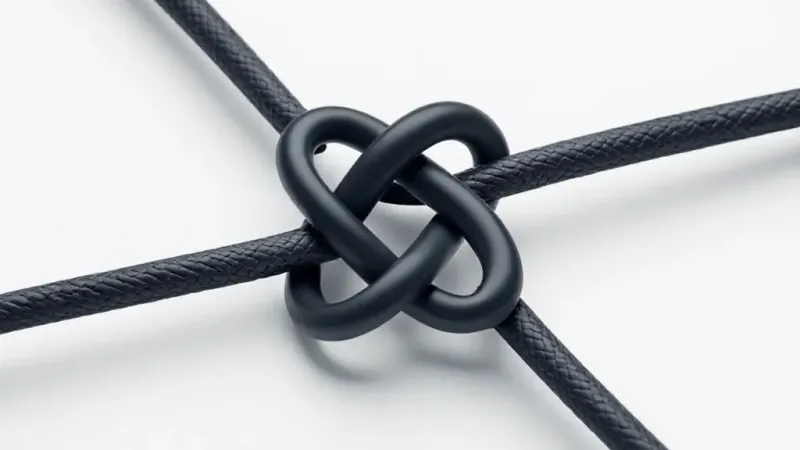
A primary critique of the FG knot centers on its perceived difficulty in tying, often described as a challenging, multi-step process. Unlike many other connections that rely on two knots jamming together or the cinching of coils, the FG employs a plaiting technique. This involves locking the main line under tension, then meticulously passing the leader material under and over the taut main line in alternating steps, typically 20 times. This forms a crisscrossed pattern where the braid bites into the thicker leader.
The mechanical principle behind the FG knot is analogous to a Chinese finger trap: the more tension applied, the tighter the plaited braid locks onto the leader. After the plaiting is complete, an overhand knot with the braid tag secures the plaiting, followed by 10 to 12 half hitches around the leader with the braid tag. While a drop of super glue can be applied to these half hitches for added security, it is advised against applying it to the plaited section itself.
Despite the initial learning curve, the FG knot’s benefits in demanding situations are frequently cited. Carl Jocumsen, an Australian-born Elite Series competitor, uses the FG knot almost exclusively, citing its slim profile as a key advantage. This allows for extended leader lengths to be spooled onto even low-profile baitcasters without compromising casting performance. Jocumsen noted the knot's exceptional strength, stating that he is more concerned with other component failures than the FG knot itself. This reported confidence in the knot's integrity, even under extreme pressure, suggests its potential as a robust solution where connection failure is not an option. Experiences with severe snags and battling powerful fish have reportedly demonstrated the FG knot's resilience, often resulting in line breakage or component failure before the knot itself.