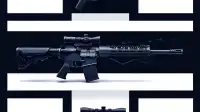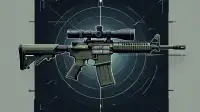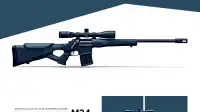
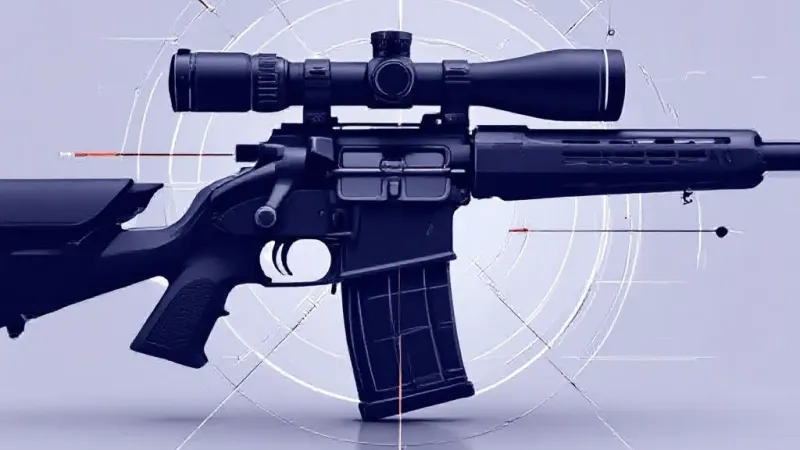
The M24 Sniper Weapons System. For many, it's a piece of U.S. military history, a benchmark for precision in its era. But for the discerning long-range shooter, it represents a foundational design that continues to influence contemporary rifle builds. My initial assessment isn't just a historical recap; it's an evaluation through the lens of modern competitive demands, seeking to understand its inherent capabilities and limitations when stacked against today's purpose-built PRS/NRL rigs.
At its heart lies the ubiquitous Remington 700 long action, a choice that speaks volumes about its rugged reliability and ease of maintenance in field conditions. While today’s top-tier custom actions offer tighter tolerances, integral recoil lugs, and tool-less bolt removal, the M700's aftermarket support remains unparalleled. The long action naturally accommodates magnum cartridges, though the M24 was chambered in .308 Winchester, leaving ample room for custom reamers. This particular example features the standard 24-inch, heavy contour (HB-V equivalent) Krieger barrel, renowned for its consistent bore and accuracy potential. The 1:11.25 twist rate is optimized for the 175-grain Sierra MatchKing, a bullet that defined military long-range precision for decades. Velocity nodes, however, will undoubtedly require thorough exploration to optimize SD/ES.
The HS Precision PST-024 stock, with its aluminum bedding block, provided a robust, consistent interface between action and stock, a significant upgrade over previous generations. While it lacks the adjustability and accessory mounting options of modern chassis systems like the MPA Matrix or MDT ACC, its rigidity and proven track record are undeniable. The ergonomics are utilitarian, designed for prone work rather than the dynamic positional shooting dominant in today's matches.
Perhaps the most telling component regarding the M24's vintage is the Leupold Mk4 M3 fixed 10x optic. While incredibly durable and a workhorse in its time, the lack of variable magnification, combined with 1/2 MOA elevation adjustments and a basic Mil-Dot reticle, presents a stark contrast to the advanced Mil-XT or Tremor3 reticles and vast travel offered by modern 7-35x56 or 8-40x56 optics. Wind calls with a fixed 10x and simple reticle demand absolute precision in ranging and environmental assessment, a skill many newer shooters rarely practice with such limitations.
This initial handling confirms the M24’s reputation for robust, no-nonsense performance. It's heavy, stable, and feels purpose-built, even if that purpose differs from current match demands. Future deep dives will focus on barrel harmonics, load development for peak performance within its .308 constraints, and critically, a thorough accuracy assessment to true its ballistic data. Understanding how this system performs today offers valuable context for the evolution of precision rifle craft.