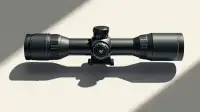
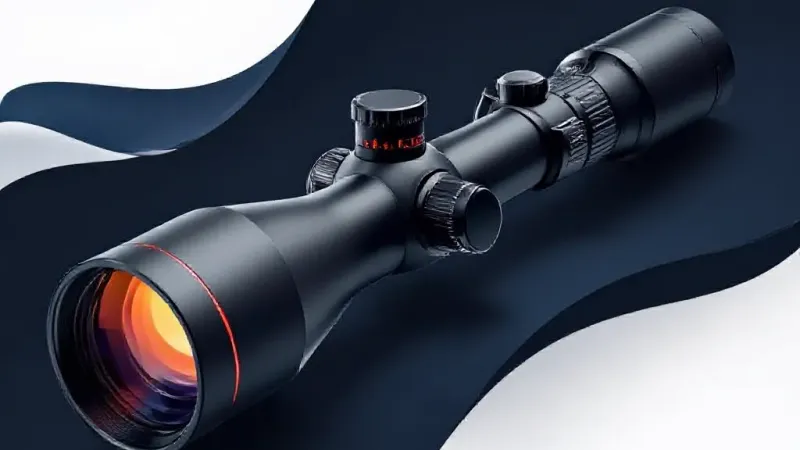
Trijicon has introduced its new REAP-IR-50 thermal riflescope series, consolidating ranging and camera capabilities directly within the optic. This integration directly addresses the common practice of carrying separate handheld rangefinders or attaching smartphones for video capture, streamlining the gear loadout for precision applications. The series features two distinct versions: the REAP-IR-50LRF, which incorporates an integrated laser rangefinder and ballistic solver, and the standard REAP-IR-50, which utilizes stadiametric ranging for distance estimation. Both models are built around a sensor core and operating system developed in-house by Trijicon’s Electro Optics Division, allowing for a purpose-built feature set.
While the REAP-IR designation has been a staple in Trijicon’s thermal catalog for years with existing 35mm and 60mm models, almost everything inside the new REAP-IR-50 represents a fresh design. At its core, the series features a 1024x768 uncooled vanadium oxide sensor with a 12-micron pixel pitch. This resolution marks a significant upgrade over the 640-class sensors often found in high-end thermal optics. The sensor refreshes at 50 Hz, and Trijicon rates its thermal sensitivity at less than 25 millikelvin. This sensitivity figure is critical, as a lower millikelvin value indicates the sensor's ability to discern smaller temperature differences, a distinct advantage in conditions like high humidity or fog where ambient temperatures are uniform.
Scene capture is handled by a manual-focus 50 mm f/1.0 objective lens, with images presented on a 1280x1024 color OLED display. The base magnification is 1.5x, digitally zoomable up to 12x. Crucially for precision shooters, the first focal plane reticle scales with the image throughout the zoom range, ensuring that holdover and ranging marks remain accurate regardless of the magnification setting.
Trijicon has also implemented two notable image-processing modes. Enhanced Target Recognition (ETR) aims to mitigate a common thermal imaging challenge: an expansive, cold sky can flatten detail across the rest of the scene. With ETR active, the scope intelligently shifts its contrast to prioritize the primary viewing area. Edge Detect mode, available in both White Hot and Black Hot palettes, outlines terrain features, brush, and structures in thin gray, while maintaining bright representation for warm bodies. Trijicon states this mode is designed to reduce eye strain during extended nighttime use. These modes complement the standard White Hot and Black Hot, three additional color palettes, and a hybrid mode dubbed Max Heat, providing a total of eight palette options.
The REAP-IR-50LRF model integrates a 905 nm laser, capable of measuring distances from 50 to 1,500 meters (approximately 55 to 1,640 yards). This measurement is fed to an onboard ballistic solver, which then applies a corrected hold to the active shooter profile displayed on screen. The system can store five such profiles, accommodating multiple rifles or diverse load data. For the standard REAP-IR-50, the laser rangefinder is omitted in favor of stadiametric ranging. This method allows shooters to estimate distance by bracketing a target with pre-calibrated deer, hog, or hare reference shapes on the display. While stadiametric ranging is inherently slower and less precise than a laser, its exclusion contributes to a lighter optic and, presumably, a reduced cost.
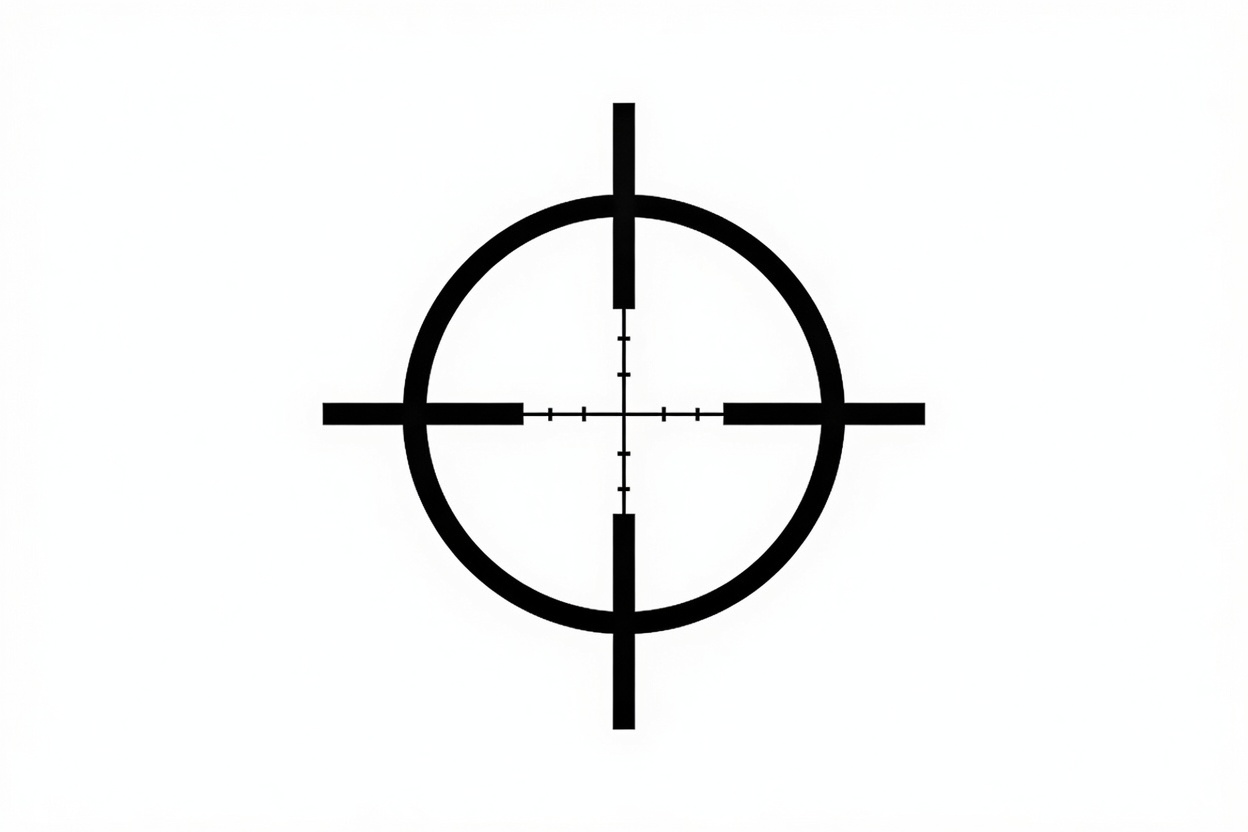
A selection of eight reticle patterns, available in eight colors, provides flexibility for various shooting scenarios. Beyond standard crosshairs in MOA and MRAD, and a simple circle dot, Trijicon includes bullet-drop compensating (BDC) reticles specifically matched to .223, .308, 300 BLK, and 7.62x39 mm cartridges.
User interface design received considerable attention. A five-button keypad is strategically placed on the sloped rear face of the housing, featuring an ambidextrous layout and buttons large enough for tactile identification in the dark or while wearing gloves. Programmable Quick Keys minimize menu navigation for frequently accessed functions, a critical advantage when time is limited on a target.
The REAP-IR-50 series also functions as a sophisticated camera. Both video and still images can be saved to 64 GB of internal memory, with recoil-activated recording offering automatic capture of critical moments. Dedicated Wi-Fi connectivity allows users to link the scope to the Trijicon App on iOS and Android devices, facilitating file transfer or enabling a live feed from the optic. This Live View feature is particularly useful for instructional purposes, allowing a guide to monitor the client's view or a new shooter to develop their thermal image interpretation skills without repeatedly sharing the rifle. Additional electronic features include pitch and roll indicators, GPS, a compass, and a microphone, while a USB-C port manages file transfers, software updates, and external power connections.
Powering the unit, two CR123 batteries provide an estimated 1.5 hours of runtime at room temperature, or roughly an hour when recording. Trijicon notes that cold weather conditions will reduce these figures. For extended operation, particularly during an all-night sit, Trijicon recommends an external power pack, estimating 12 to 14 hours of runtime from a 10,000 mAh battery bank connected via the USB-C port. Shooters planning such prolonged use will need to consider mounting solutions for an external battery.
Durability is a core component of the design, with the aluminum housing finished in Cerakote FDE. The REAP-IR-50 series has been built and tested to MIL-STD-810H standards, ensuring resilience against shock, vibration, and temperature extremes. It is rated for operation from −26° to 131°F and can survive submersion to 1 meter for one hour. Attachment to a rifle is via Trijicon’s Q-LOC Picatinny mount.
In terms of weight, the REAP-IR-50LRF model weighs 54.9 ounces (approximately 3.4 pounds) with its mount and lens cap, but without batteries. The standard REAP-IR-50 model comes in slightly lighter at 51.4 ounces. Retail pricing is set at $9,499 for the REAP-IR-50LRF, which includes a hard case, the Q-LOC mount, a USB-C cable, two CR123 batteries, and a LensPen. The standard REAP-IR-50 is priced at $8,999.