The landscape of precision rifle shooting has seen dramatic evolution, from the intricate custom work once required to achieve consistent accuracy to the sophisticated, off-the-shelf components available today. A prime example of this advancement is the Vortex Razor HD Gen III series, which, according to extensive user feedback, represents a significant leap in optics design.
Today's competitors benefit from advancements in propellant consistency, precision rifle manufacturing, uniform projectiles and brass, and sophisticated optics that were scarcely imaginable decades ago. Experienced users note that Vortex's design philosophy, reportedly driven by direct shooter feedback, has led to a lineup that is remarkably modern, contrasting with periods of slower innovation in optics development where a new reticle or minor turret upgrade was considered groundbreaking. The alignment of reticle subtensions with turret adjustments, now a standard expectation, was once a significant advancement, eliminating the "monkey math" that often complicated holdovers and adjustments for early long-range shooters.
Modern optics demonstrate exceptional zero retention, allowing for confident transfer between rifles and calibers without the deep-seated concerns over impact shift that plagued older generations. This reliability is a hallmark of the Razor HD line. While noted to be heavier than some counterparts, this mass is frequently perceived as a worthwhile trade-off for enhanced ruggedness and reliability, mitigating "doubts" about durability under demanding conditions. The series' resilience is underscored by reports of optics maintaining zero and repeatability even after accidental drops, impacts with barricades, and use on heavy-recoiling platforms like the .50 BMG.
Among the series, a notably compact optic, measuring just 10 inches, stands out for its versatility. Though it falls into the LPVO category, its magnification range is observed to rival what were once considered dedicated sniper rifle optics. This optic is reportedly effective from close-quarters engagements to targets beyond 1,000 yards. Its lightweight nature makes it suitable for 16-inch 5.56 carbines, while also performing well on larger-frame rifles and integrating seamlessly with clip-on thermal and night vision devices. Features such as capped turrets are frequently cited as beneficial for "knock-around optics" used in dynamic competition or harsh field environments. While its optical quality is stellar, users note that its narrower tube can limit light collection in low-light conditions. A common preference expressed is for a reticle with a finer aiming point at its center to enhance precision for small targets or hunting scenarios, though the current design functions well as a red dot at 1x and is not seen as a significant impediment 99 percent of the time.
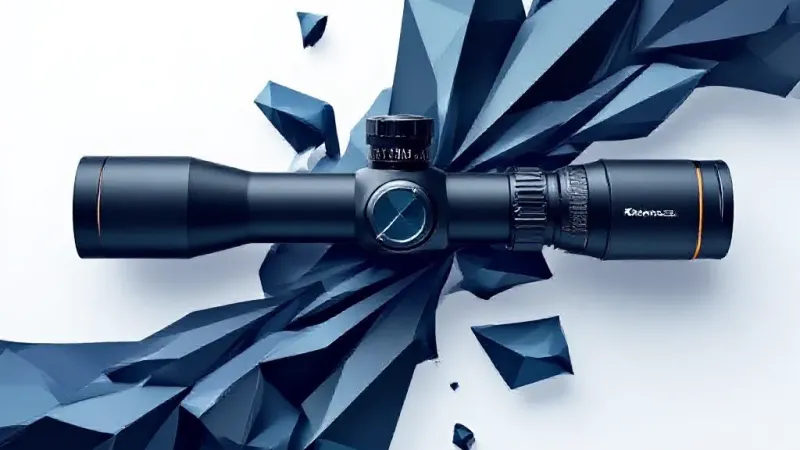
A more recent addition to the Gen III family, the 4-24x44mm, is widely regarded as one of the most versatile scopes currently available. It strikes a balance between being robust enough for serious long-range and target work and being sufficiently compact and light for extended field carry. This model intelligently blends features from both larger and smaller scopes in the series. It shares a similar elevation turret layout with the larger 6-36x, but crucially, it incorporates a covered windage turret. This feature is highly valued by many experienced shooters who prefer to use holdovers for windage adjustments, minimizing the risk of inadvertent turret movement, a common issue with exposed windage turrets on older scopes.
This 4-24x44mm optic has proven particularly effective when paired with modern cartridges such as the 6.5 Creedmoor and 6GT. Its magnification range is described as exceptionally well-suited for these calibers, offering ample precision without the bulk typically associated with higher-magnification, target-oriented optics. At approximately a foot in length, its compact footprint makes it a strong candidate for carbines or SPR builds, reinforcing its broad applicability across various shooting disciplines.