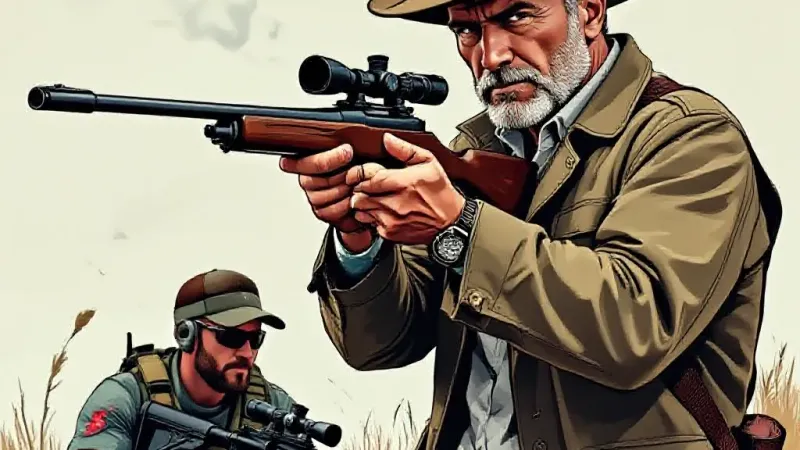
The lore surrounding Jack O’Connor, particularly his affinity for the .270 Winchester and his global sheep hunting expeditions, often focuses on the romanticism of the chase. However, a deeper dive into his experiences, such as a decades-old pursuit of mouflon and aoudad on a high-fenced Texas ranch, reveals a potent lesson in practical ballistics and field craft that remains acutely relevant for today’s PRS and NRL competitors. While the targets were living animals, the environmental challenges and the demands for precise shot placement mirror the pressures of any competitive long-range stage.
The Texas Hill Country, even within a controlled environment, presents a dynamic backdrop. O'Connor faced rapidly changing wind vectors, undulating terrain, and varying shot distances – a familiar scenario for anyone who's struggled with a shifting crosswind or an awkward positional shot on a 10-MOA plate at 800 yards. The mouflon and aoudad, with their distinct vitals and varying target profiles, required an intimate understanding of his rifle’s capabilities and his own marksmanship under real-world stress. This wasn't a static bench rest exercise; it was an applied ballistic problem where every variable counted.
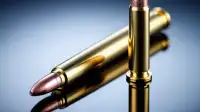
Consider the equipment of the era: O'Connor was likely running a classic bolt-action, perhaps a Winchester Model 70, chambered in .270 Winchester, topped with a fixed-power or early variable optic. His 130-grain Nosler Partitions, while excellent hunting bullets, possess a G1 BC far removed from the high-BC, heavy-for-caliber projectiles common in competitive 6mm and 6.5mm cartridges today. Yet, the principles of compensating for drop and drift remained paramount. O’Connor undoubtedly relied on extensive range time and meticulous record-keeping – his own form of a mental DOPE card – to understand his trajectory, making calculated holdovers or minimal clicks based on a solid 100-yard zero.
This historical context highlights the timeless fundamentals. The need for precise rangefinding, understanding density altitude's impact on bullet flight, and making accurate wind calls were as critical for O'Connor’s success as they are for a top-tier PRS shooter navigating a tricky barricade stage. While he didn't have access to modern Kestrel devices for real-time atmospheric data or advanced ballistic calculators, his experienced eye and deep understanding of his load’s performance compensated. His emphasis on a solid, repeatable firing solution, even from field positions, underscores the foundation of modern positional shooting.
Ultimately, O'Connor's Hill Country "field exercise" serves as a powerful reminder that while technology advances, the core tenets of precision remain constant. Whether engaging an aoudad at extended range or a spinner at 1,000 yards, the mastery of external ballistics, impeccable wind reading, and disciplined trigger control are non-negotiable. His experiences reinforce that successful long-range engagement is less about the target and more about the shooter's ability to consistently apply fundamental ballistic science under pressure.