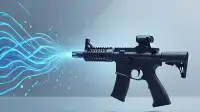
The ongoing discussion among precision rifle competitors regarding how a suppressor influences muzzle velocity often swings between two poles: some maintain no appreciable change, while others posit a measurable increase, effectively extending the barrel's length. For match shooters meticulously truing their data and chasing every foot per second for precise DOPE, understanding this dynamic is critical. A recent data gathering effort, which remains ongoing, has shared preliminary findings that offer insight into this debated topic, indicating a negligible impact on velocity.
The methodology involved direct comparisons of identical loads fired from the same rifles, both with and without a suppressor attached. This approach aims to isolate the suppressor's influence on projectile speed. The preliminary results, while not exhaustive, provide a valuable initial look at real-world implications for competitive shooters.
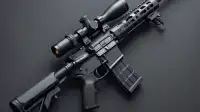
One platform examined was a Ruger Precision Rifle chambered in 6.5 Creedmoor. For this particular rifle, five distinct loads utilizing 142-grain Sierra MatchKing (SMK) projectiles were tested, both in its unsuppressed configuration and equipped with a Q LLC suppressor. The data revealed a nuanced outcome: three of the five tested loads exhibited a higher muzzle velocity when the rifle was fired unsuppressed. Conversely, the remaining two loads demonstrated a slight increase in muzzle velocity when the Q LLC suppressor was attached.
Further observations from a Lithgow rifle, also paired with a Q can, added to the dataset. For certain ammunition types, a modest velocity advantage was observed when the suppressor was in place. These varied results across different loads and platforms underscore the complexity of direct comparisons and the often-marginal differences observed.
Across the collected information, the overarching conclusion drawn from this preliminary dataset is that suppressors have a negligible effect on muzzle velocity. For PRS and NRL competitors, this suggests that the presence or absence of a suppressor is unlikely to necessitate significant adjustments to ballistic calculations or DOPE cards based solely on velocity shifts. While environmental factors, barrel harmonics, and load development remain paramount for achieving peak precision and consistency, these initial findings suggest that velocity variation introduced by a suppressor is not a primary variable requiring extensive compensation.
This understanding is particularly relevant for managing cold bore shots, establishing reliable velocity nodes, and ensuring consistent hit probability at extended ranges. Shooters who routinely swap between suppressed and unsuppressed configurations for practice or specific stages may find reassurance in these preliminary findings, indicating that their established velocity data is likely to hold true, regardless of the suppressor's presence. As data collection continues, the community will undoubtedly watch for further insights that refine our understanding of this common accessory's subtle effects.