The question of how rifle suppressors influence muzzle velocity has long been a point of contention within the precision rifle community, directly impacting ballistic solutions and DOPE cards for PRS and NRL competitors. Some hold that a suppressor effectively extends barrel dwell time, leading to a marginal increase in MV, while others posit no significant change. To cut through this debate with empirical evidence, rifleshooter.com has embarked on a comprehensive data collection effort, methodically testing various loads in the same firearms both with and without suppressors. While acknowledging that this data-gathering process is a "never ending" pursuit, rifleshooter.com has shared initial findings to contribute valuable insight to the ongoing discussion.
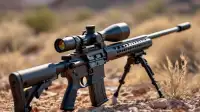
One of the primary test platforms utilized in their study was a Ruger Precision Rifle chambered in 6.5 Creedmoor, a common sight on competitive firing lines. For this specific evaluation, five distinct 142 gr Sierra MatchKing (SMK) handloads were meticulously analyzed. The muzzle velocities of these five loads were compared with the rifle in two configurations: bare muzzle and equipped with a Q LLC suppressor. The results from this dataset revealed a nuanced picture rather than a uniform trend. In three out of the five tested loads, the unsuppressed rifle actually recorded a higher muzzle velocity. Conversely, for the remaining two loads within the same test, the rifle equipped with the Q LLC suppressor exhibited a marginally higher muzzle velocity. This variability underscores the complexity of the phenomenon and highlights why a definitive, universally applicable statement has been elusive.
Further analysis, according to rifleshooter.com, extended to another setup involving a Lithgow rifle also paired with a Q can. While the specific load breakdown was not detailed in the same manner as the Ruger test, observations from this additional data also showed a mixed outcome. For some ammunition tested with the Lithgow, a slight advantage in muzzle velocity was indeed present when the suppressor was affixed. However, synthesizing all of their collected data to date, rifleshooter.com's overarching conclusion is clear: suppressors have a negligible effect on muzzle velocity. For the dedicated precision shooter, this finding simplifies a variable that might otherwise complicate truing data and stage planning, affirming that the meticulous focus on consistent handloads and accurate atmospheric conditions remains paramount over anticipated suppressor-induced velocity shifts.