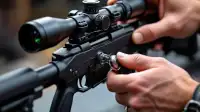

In the relentless pursuit of fractional advantage on the PRS and NRL circuit, every component of a precision rifle system is scrutinized. While maximizing ballistic coefficient (BC) and maintaining tight velocity standard deviation (SD) are paramount, the physical characteristics of the rifle itself significantly impact stage performance. One critical area often overlooked by newer competitors, but a staple for seasoned pros, is the deliberate optimization of barrel length and the quality of its crown.
The decision to shorten a barrel from its factory length—or to spec a custom barrel shorter from the outset—is a calculated trade-off. For cartridges like the 6 Dasher, 6GT, or 6.5 Creedmoor, moving from a 26-inch tube to a 20-22 inch variant will invariably reduce muzzle velocity. This means slight adjustments to DOPE cards and potentially greater wind deflection at extended ranges. However, the gains in handling, balance, and weight reduction for positional stages, particularly on tank traps, barricades, and tricky tripod setups, are often invaluable. A shorter barrel shifts the rifle's center of gravity rearward, making transitions smoother and mitigating wobble during sustained holds. This is a tangible advantage when every second counts and stability is paramount for breaking clean shots.
Crucially, any barrel shortening demands a concentric, burr-free, and perfectly square crown. The crown is the last point of contact between the barrel and the bullet, and any imperfection—even microscopic—will disrupt the uniform escape of propellant gases, inducing yaw and compromising accuracy. We’re not talking about simply "chopping" a barrel; this is precision machining. A properly executed recessed target crown, machined with a sharp carbide tool on a rigid lathe, is essential. It protects the critical rifling lands and ensures gas exit is symmetrical, preserving the bullet's stability downrange. Without this level of detail, even the most meticulously loaded ammunition with minimal velocity ES will struggle to deliver its full precision potential.
Understanding barrel harmonics and velocity nodes is also key. While shortening a barrel might shift optimal powder charges or require barrel tuners, the primary goal remains consistency. The best gunsmiths understand that the quality of the cut and crown directly impacts the rifle's ability to repeatedly place shots within the target's MOA or MRAD dimensions. This isn't just about making the rifle shorter; it's about making it perform *better* in the specific context of competitive shooting, where rapid engagements, complex positions, and unforgiving time limits demand absolute reliability from every component. For the dedicated competitor, a barrel tuned for length and meticulously crowned isn't just an aesthetic choice; it's a performance imperative.